hello@slated.gg
Powered by IGDB•Privacy•Terms

© 2026 Slated.gg

Slated.gg
Popular GamesAboutDiscover Games
Virtue and a Sledgehammer

Devolver Digital • 2026 • PC (Microsoft Windows)
Satisfying to completeEasy to jump intoPerfect for a weekend
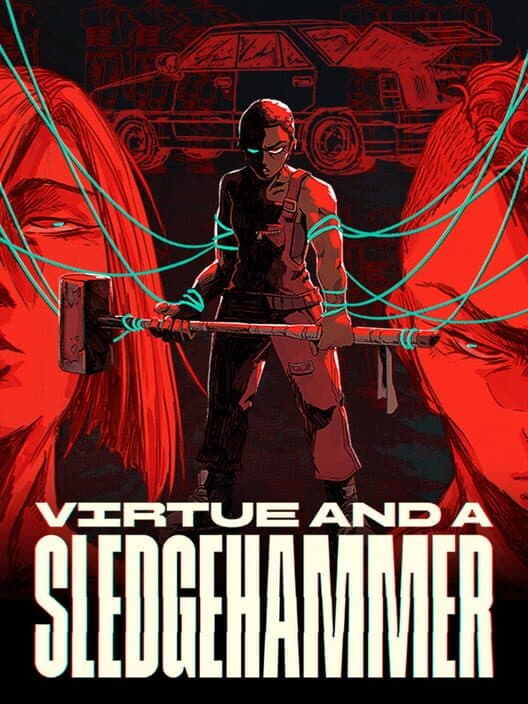
Virtue and a Sledgehammer cover art

Virtue and a Sledgehammer

Devolver Digital • 2026 • PC (Microsoft Windows)

Satisfying to completeEasy to jump intoPerfect for a weekend

Is Virtue and a Sledgehammer Worth It?

Virtue and a Sledgehammer looks worth it if you want a short, emotionally heavy game where breaking things is tied to something personal instead of being a pure toy. The big draw is the mix: smashing through homes and robots seems immediately satisfying, while the story turns that destruction into a messy return-home reckoning about grief, identity, and not belonging anymore. What it asks from you is not extreme skill or a huge time budget. It seems built for a few evenings, with readable combat, light experimentation, and strong story focus. The bigger ask is mood. This does not look breezy, cozy, or endlessly replayable. It also may launch with some rough animation and movement polish if the current footage is representative. Buy at full price if you already like compact narrative games that leave you thinking after the credits. Wait for a sale if you are interested but cautious about rough edges or heavy themes. Skip it if you mainly want a polished action game, a pure destruction sandbox, or something light to unwind with.

What is Virtue and a Sledgehammer like?

Opinions of Virtue and a Sledgehammer

What Players Love

  • Players Love

    Smashing buildings and robots feels great right away

    Preview coverage keeps coming back to the same thing: the hammer has real weight, tearing through walls and enemies feels satisfying, and the destruction hook lands fast.

  • Players Love

    The painful hometown story gives destruction real meaning

    Players interested in the demo say the appeal is not just wrecking things. The family history, digitized neighbors, and return-home premise make the smashing feel purposeful.

Common Concerns

  • Common Concern

    Movement and hammer animations still look rough in footage

    The clearest early criticism is stiffness in walking and some attack wind-ups. That may improve by launch, but it stands out enough to matter for feel and polish.

Divisive Aspects

  • Divisive

    The tone is much heavier than the smash fantasy

    Some people are excited by the darker, more personal angle, while others may want a breezier break-things romp. The emotional weight is part of the pitch, not a side note.

What does Virtue and a Sledgehammer demand from you?

Time

LOW

Time

It appears built for a few evenings rather than a long-term habit, with solid pause support, decent stopping points, and some limits from auto-save only.

LOW

For most people, this seems like a compact commitment. Based on current public material, the full experience will probably land somewhere around 4 to 9 hours, with satisfaction tied to seeing the story through rather than grinding optional systems. That makes it a strong fit if you want something you can finish and think about, not live inside for months. The session flow also looks fairly manageable. Story reveals, memory scenes, and visually distinct area shifts should create natural places to stop. Full pause helps a lot if life interrupts. The catch is the save system. Auto-save only means you may not always be able to quit at the exact second you want, especially if you are in the middle of a fight or between checkpoints. Coming back after time away should be moderately easy because the systems are simple and the game is short. Still, you may need a few minutes to remember which parts of the neighborhood you already smashed open and where the story last left off. It is fully solo, so there are no group obligations.

Tips
  • Aim to stop after a major reveal or area transition, since auto-save only may not respect ultra-short drop-in sessions.
  • If you know you have limited time, avoid starting a new memory scene in the last ten minutes of play.
  • After a break, take one slow lap through the nearby streets to rebuild your mental map before pushing onward.

Focus

MODERATE

Focus

You’ll spend most sessions exploring, reading spaces, and choosing what to break next, with short melee bursts that punish zoning out more than slow thinking.

MODERATE

This game seems to ask for steady, grounded attention rather than maximum concentration. Most of your time will likely be spent moving through damaged streets, checking what can be smashed open, and reading the world for hints about where the next story thread lives. That means you are engaged often, but not in the exhausting way of a strategy game or a demanding action game. The biggest mental ask comes from the mix. You are not just walking forward. You are deciding whether a wall, fence, or abandoned structure is the intended route, an optional detour, or a dead end. Then the pace shifts and robots show up, which means your brain has to switch from curiosity to spacing and timing. Add in memory scenes and reading-heavy moments, and the session becomes varied in a way that keeps you present. In return, that attention buys a stronger sense of place. Smashing your way through the hometown is not busywork. It seems designed to make every route choice feel personal, physical, and tied to the story.

Tips
  • When you enter a new area, spend a minute scanning breakable walls and blocked alleys before pushing forward. That saves wandering later.
  • Treat fights as short spacing tests, not combo showcases. One careful swing and reposition will likely work better than rushing.
  • If you step away for a few days, reenter by revisiting the last major landmark you remember, not by chasing the objective immediately.

Challenge

LOW

Challenge

Most players should feel comfortable within the first evening, since the basics look simple and mistakes seem lightly punished even when the game asks you to experiment.

LOW

This looks approachable. The likely learning curve is understanding a small set of verbs well: move through a 3D space, swing a heavy hammer, read simple enemy behavior, and test the environment to see what can be broken open. That is a much easier ask than learning a big skill tree, a complex combat toolkit, or a pile of hidden systems. The one twist is that the game seems to trust you more than a fully guided adventure. You may need to experiment a little with demolition to find routes or shortcuts, and there may be moments where the next step is not highlighted in a bright, obvious way. Even then, the systems themselves appear legible. This feels more like “try the hammer and look around” than “open a wiki.” In return, the early learning pays off quickly. Once the movement, spacing, and destruction rules click, the game likely gets out of your way and lets the story and atmosphere carry the rest. That makes it friendly to players who want a short, memorable experience without a long training period.

Tips
  • If a path seems blocked, experiment with nearby walls, fences, or side structures before assuming you missed a key item.
  • Watch enemy wind-ups once before committing. The hammer appears heavy enough that patience should beat button mashing.
  • Do not overthink optimization. This seems built around finding a workable route, not the perfect route.

Intensity

MODERATE

Intensity

The game seems more emotionally bruising than mechanically brutal, with tense robot encounters and heavy memory scenes creating unease without turning every minute into panic.

MODERATE

The main strain here probably comes from what the story is about, not from how hard the combat is. Smashing buildings and robots should feel cathartic in the moment, but the wider frame is grief, family conflict, alienation, and the ugly feeling of returning somewhere that no longer feels like home. That gives the action a sharper edge than a normal destruction fantasy. The good news is that this does not look punishing in the usual sense. Fights appear readable, checkpoints are likely generous, and the game is not being sold as a test of elite skill. The bad news, if you want something light, is that the emotional weight may stick with you longer than any individual battle. You may finish a session feeling sad, uneasy, or wrung out even if nothing especially difficult happened. In return, that pressure seems to serve a purpose. The discomfort appears tied to the theme instead of being random friction. If you like games that leave a mark, that can be a real strength.

Tips
  • Play this when you want to sit with something heavy, not as background comfort after a draining day.
  • Use the full pause during story scenes or after a big reveal if the mood starts to feel like too much.
  • If combat starts feeling chaotic, back up and reset spacing. The pressure seems to come in bursts, not endless swarms.

Frequently Asked Questions

Virtue and a Sledgehammer does not look especially hard. Based on current footage and demo impressions, it seems closer to a story-first action adventure like Uncharted on normal than to a punishing melee game. The main challenge should come from short-range hammer fights, judging enemy wind-ups, and figuring out where to break through the environment when the path is not obvious. That said, “easy to learn” is not the same as “mindless.” You will probably need an hour or two to get comfortable with the weight of the hammer, the rhythm of robot encounters, and the game’s habit of letting destruction act as navigation. Once that clicks, most players should feel basically competent without needing deep practice. The biggest wildcard is polish. If movement or attack animations still feel stiff at launch, some moments may feel rougher than intended. But assuming the final release lands near the demo’s apparent design, this should be a moderate game mechanically and a heavier one emotionally. People looking for tough boss walls may find it too gentle, while people wanting pure story may still hit a few tense spots.

Expect roughly 4 to 9 hours for a full playthrough, with most players likely landing around 5 to 7 if they focus on the main path and do a normal amount of exploring. Because the game appears to be a compact, authored story, the first credits roll is probably the point where most people will feel they fully got what it offers. Sessions should work well in the 60 to 90 minute range. The best stopping points will likely be after a major story reveal, a memory sequence, or when you reach a new part of the neighborhood. Full pause helps if life interrupts, but auto-save only means you may not always be able to quit at the exact second you want. If you like to inspect every corner and test extra demolition routes, you may push toward the high end. Replay value looks modest, so this is better thought of as a short, memorable experience than a long-running hobby game. One important caveat: these are still pre-launch estimates based on public materials, not finished player data.

Virtue and a Sledgehammer looks more emotionally stressful than mechanically stressful. The likely feeling is unease, sadness, and catharsis rather than constant panic. Robot fights and uncertain routes should create short bursts of pressure, but the bigger weight comes from the story’s trauma, family conflict, and ugly sense of being out of place in your own hometown. For some people, that is the good kind of stress. The discomfort seems purposeful, tied to what the game wants to say. If you like narrative experiences that leave you thinking and feeling a little bruised, this could be exactly the point. For others, especially if you are looking for comfort play after a hard day, it may feel like too much. The good news is that it does not look brutally punishing. You can pause fully, the combat appears readable, and failure likely means a brief setback rather than a disaster. Best time to play: when you want to be absorbed by something intense and personal. Worst time to play: when you want something light, funny, or mentally easy.

Yes. Virtue and a Sledgehammer appears completely built for solo play, and in fact that seems to be the intended way to experience it. There is no sign of co-op, PvP, online dependence, or any other system that assumes you have friends waiting on you. You can move through it at your own pace, stop to read, linger in an area, or pause during a tense moment without affecting anyone else. That solo focus also fits the story. The game seems centered on a personal return-home journey, with memory scenes, environmental storytelling, and emotionally uncomfortable moments that would likely feel stranger if the design tried to split attention across multiple players. The only small caveat is practical rather than social: auto-save only means it may not be perfect for ultra-fragmented play, even though full pause helps a lot. But if your question is simply whether this works as a solo game, the answer is an easy yes. This looks like a deliberately solitary, authored experience from start to finish.

No. Everything public points to a straightforward one-time purchase with no pay-to-win elements at all. There is no sign of microtransactions, boosters, premium currencies, battle passes, loot boxes, or any system that lets you spend money for better combat power, faster progress, or easier wins. That fits the kind of game this is trying to be. Virtue and a Sledgehammer appears to be a compact, single-player story experience with a clear ending, not a competitive or live-service game built around long-term monetization. Because there is no multiplayer ladder, no PvP balance to influence, and no gear grind economy, the usual pay-to-win concerns barely apply here in the first place. As always, it is smart to glance at the store page at launch in case anything changes, but based on current official information, this should be one of the cleaner purchase decisions you can make: buy the game once, play the full experience, and that is it.

You Might Also Like

Games with a similar rhythm and feel, even if they look different
Explore more→
Grand Theft Auto IV game cover art
Satisfying to completeEasy to jump into

Grand Theft Auto IV

Time
MODERATE
Focus
MODERATE
Challenge
LOW
Intensity
MODERATE
Rise of the Tomb Raider game cover art
Satisfying to completeEasy to jump into

Rise of the Tomb Raider

Time
MODERATE
Focus
MODERATE
Challenge
LOW
Intensity
MODERATE
BioShock: The Collection game cover art
Satisfying to completeEasy to jump into

BioShock: The Collection

Time
MODERATE
Focus
MODERATE
Challenge
LOW
Intensity
MODERATE
Tomb Raider game cover art
Satisfying to completeEasy to jump into

Tomb Raider

Time
LOW
Focus
MODERATE
Challenge
LOW
Intensity
MODERATE
Exodus game cover art
Satisfying to completePerfect for a weekend

Exodus

Time
MODERATE
Focus
MODERATE
Challenge
MODERATE
Intensity
MODERATE
Control game cover art
Satisfying to completePerfect for a weekend

Control

Time
MODERATE
Focus
MODERATE
Challenge
MODERATE
Intensity
MODERATE
← Back to Home