hello@slated.gg
Powered by IGDB•Privacy•Terms

© 2026 Slated.gg

Slated.gg
Popular GamesAboutDiscover Games
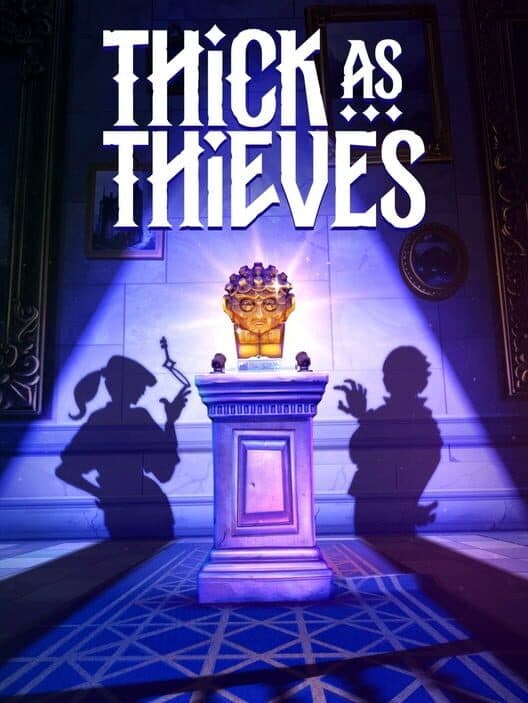
Thick as Thieves

Megabit Publishing • 2026 • PC (Microsoft Windows), PlayStation 5, Xbox Series X|S

Satisfying to completePerfect for a weekendEasy to jump into
Thick as Thieves cover art

Thick as Thieves

Megabit Publishing • 2026 • PC (Microsoft Windows), PlayStation 5, Xbox Series X|S

Satisfying to completePerfect for a weekendEasy to jump into

Is Thick as Thieves Worth It?

Yes, if you want a cheap, compact heist game and you enjoy learning the same spaces until you feel clever. Thick as Thieves does not offer a giant campaign or much variety, but its core sneaking is real fun: checking patrols, slipping through side routes, grabbing extra loot, and barely making it out during the final rush. That makes it easy to recommend at full price for people who like stealth and do not mind a small package. The low price helps because this feels more like a strong sampler than a full feast. Wait for a sale only if you are unsure about repeated-map mastery, dislike timers, or need frequent pauses. Skip it if you want a big story, lots of locations, or a game that lets you save whenever life interrupts. The best version of Thick as Thieves is a focused weekend game, especially with a friend. Judge it on that scale and it is worth it.

What is Thick as Thieves like?

Opinions of Thick as Thieves

What Players Love

  • Players Love

    Sneaking through the maps feels clever and rewarding

    Players consistently praise the heists moment to moment: reading patrols, finding side entries, and using gadgets to turn familiar rooms into satisfying little victories.

  • Players Love

    Co-op turns small heists into lively shared stories

    A second thief adds backup, faster improvisation, and fun last-minute escapes. Many players say the same maps feel fresher and far more memorable with a partner.

Common Concerns

  • Common Concern

    Two maps make the package feel thin fast

    The biggest complaint is scope. Many players enjoy the sneaking, then feel they have seen most of what the game offers after a short run through repeated contracts.

  • Common Concern

    No pause and extraction timers frustrate careful play

    The game asks for slow, careful infiltration, then layers on timed exits with no mid-mission safety net. That clash between methodical play and rigid structure is a common frustration.

  • Common Concern

    Early difficulty and guard behavior feel rough

    Some players say the opening hours are too easy, while inconsistent guard behavior and progression-locked harder modes keep the stealth from feeling sharp right away.

Divisive Aspects

  • Divisive

    Low price changes how players judge the scope

    Some people see a smart five-dollar sampler and leave happy. Others think the same small scale makes the release feel more like a foundation than a finished meal.

What does Thick as Thieves demand from you?

Time

LOW

Time

It is a short weekend-sized package with clean mission endpoints, but each run needs an uninterrupted chunk because you cannot pause or save mid-heist.

LOW

This is a short game with clean stopping points, but it is less flexible than its small size suggests. A satisfying first pass usually lands around 4 to 8 hours, with a few more if you want to try the second thief, harder settings, or co-op. Each contract gives you a clear beginning and end, so it is easy to say “one run tonight” and stop there. The catch is what happens inside the run. Missions commonly last around 30 to 45 minutes before menu time, there is no mid-mission save, and you cannot freely pause, so you need a real uninterrupted block. That makes it much better for planned evening sessions than for “I might get pulled away” play. The good news is that coming back after a few days is not too painful. There are only two main spaces to relearn, the tool list is small, and the overall goal structure is readable. The game asks for protected chunks, then rewards you with a compact weekend-sized sneaking fix rather than a month-long commitment.

Tips

  • Plan for 30 to 60 minutes per run plus menu time, because there is no safe quick-save if life interrupts.
  • If you step away for a week, replay an early contract first. It quickly refreshes routes, tools, and extraction timing.
  • Solo is the easier fit for tight schedules. Co-op is more lively, but coordinating endings adds small chunks of extra commitment.

Focus

MODERATE

Focus

Most of each mission is patient sneaking and map reading, then the extraction timer suddenly asks for faster choices and cleaner execution.

MODERATE

This game asks for steady, active attention rather than lightning-fast hands. In most missions, you spend long stretches reading patrol routes, watching sightlines, checking notes for clue locations, and deciding whether a window, rooftop, or side hall is the safer way in. That makes it a poor second-screen game. You can sometimes breathe in a shadowy corner, but you still need your eyes on the room because one missed guard pass or turret can ruin a clean route. The good news is that it is more about planning than panic. Most of the hour feels deliberate and thoughtful, with the quick-thinking stuff saved for detection moments and the final escape. That trade works well if you enjoy feeling clever inside compact spaces. The game asks you to study a small set of maps and slowly read them better each run, and in return it delivers that satisfying feeling of truly knowing a building.

Tips

  • Treat your first runs as scouting trips. Learn a safe entry and one backup exit before worrying about extra loot.
  • Use the hideout to simplify decisions. Pick a small tool kit you understand instead of swapping every gadget each mission.
  • In co-op, call your route and extraction plan early so the final timer does not turn into two people improvising at once.

Challenge

MODERATE

Challenge

You can understand the basics in a night, but the fun comes from slowly learning shortcuts, guard habits, and how to escape under pressure.

MODERATE

You can get the basics pretty quickly. The tool set is small, the campaign is short, and the overall loop makes sense after a mission or two. Where the game becomes more interesting is in the stuff it does not fully spell out at first: how clue hunting flows, which routes are safer on repeat runs, when extraction pressure will force you to abandon a perfect plan, and how the maps change once harder settings add more defenses. So this is easy to start, but more gradual to really appreciate. It asks for a little patience with repetition and a willingness to learn through reruns rather than one long tutorial. The nice part is that it rarely punishes curiosity too harshly. Even messy runs can still move your unlocks forward, which makes experimenting feel worthwhile. For the right player, that trade is good: the game asks you to replay a small space until it clicks, and in return it delivers the joy of turning confusion into confidence.

Tips

  • Learn one reliable route per map first. Variety gets more fun once you understand where patrols, hazards, and shortcuts usually sit.
  • Do not judge the game too early on its easiest setting. Harder tiers make the spaces feel more alive and demanding.
  • Bank progress between runs, not during them. Treat each mission like a single puzzle attempt with rewards even when things go wrong.

Intensity

LOW

Intensity

This stays cool and methodical for long stretches, but late-mission escapes create a real pulse spike without turning every mistake into a disaster.

LOW

This is not an exhausting pressure cooker, but it is not cozy either. Most of the mission feels controlled: you crouch through shadows, time patrol gaps, and try to keep the run tidy. The pulse spike comes later. Once you finish the main objective, the extraction timer kicks in and the mood shifts from careful planning to quick compromise. That creates short bursts of real stress, especially if you took a risky route in and have to invent a safer way out. The overall sting stays moderate because the game is pretty forgiving. Failure does not usually erase everything, and the default setting is widely seen as softer than the concept suggests. What the game asks from you is comfort with mild stealth tension and occasional time pressure. What it gives back is a satisfying rush at the end of a mission without turning every run into a brutal punishment spiral. It plays best when you want alert, focused fun, not a fully relaxing wind-down.

Tips

  • Start on Rookie if you mainly want the fantasy of a clean heist, then raise the difficulty once the maps stop surprising you.
  • Play when you have a protected hour. The lack of pause matters more than the danger level.
  • When extraction starts, stop chasing perfect stealth and commit to the safest exit you already know.

Frequently Asked Questions

You Might Also Like

Games with a similar rhythm and feel, even if they look different

Explore more→
Deathloop game cover art
Satisfying to completePerfect for a weekend

Deathloop

Time
MODERATE
Focus
HIGH
Challenge
MODERATE
Intensity
MODERATE
Pacific Drive game cover art
Satisfying to complete

Pacific Drive

Time
MODERATE
Focus
MODERATE
Challenge
MODERATE
Intensity
MODERATE
Hardspace: Shipbreaker game cover art
Satisfying to complete

Hardspace: Shipbreaker

Time
MODERATE
Focus
MODERATE
Challenge
MODERATE
Intensity
LOW
007 First Light game cover art
Satisfying to completePerfect for a weekend

007 First Light

Time
MODERATE
Focus
MODERATE
Challenge
MODERATE
Intensity
MODERATE
Grand Theft Auto III game cover art
Satisfying to completePerfect for a weekend

Grand Theft Auto III

Time
LOW
Focus
MODERATE
Challenge
LOW
Intensity
MODERATE
Watch Dogs 2 game cover art
Satisfying to complete

Watch Dogs 2

Time
MODERATE
Focus
MODERATE
Challenge
MODERATE
Intensity
MODERATE
← Back to Home