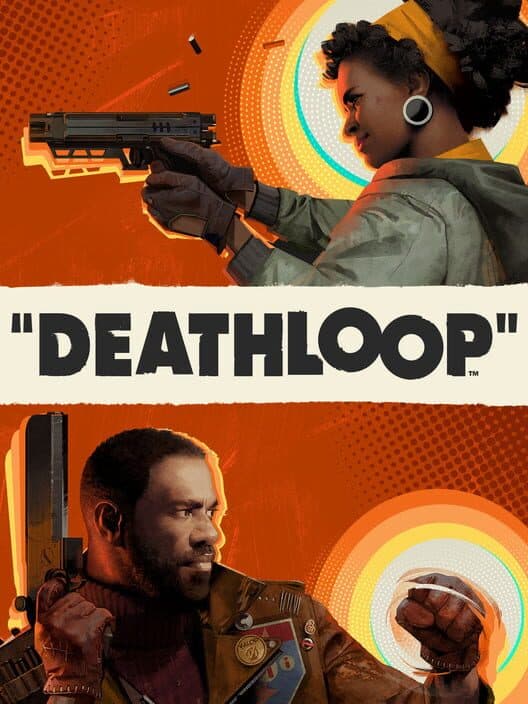
Bethesda Softworks • 2021 • PC (Microsoft Windows), PlayStation 5, Xbox Series X|S
Deathloop is worth it if you like stylish games that reward getting smarter rather than simply aiming faster. Its best trick is how Blackreef’s small maps open up over time: routes, secrets, and target schedules start to click, and every run feels more deliberate. Colt and Julianna’s banter also gives the whole thing real spark, so even repeated areas stay lively. What it asks from you is patience during the first few hours. The onboarding is a little busy, the menus take some getting used to, and the game is more about learning a system than blasting through a straight campaign. If you hate repetition or want a punishing shooter, it may feel too guided early and too easy later. Buy at full price if Arkane-style level design, stealth-or-loud freedom, and a medium-length campaign sound great. Wait for a sale if you’re curious but unsure about the loop structure or soft enemy AI. Skip it if you want constant novelty, manual saves, or a real challenge on default settings.

Bethesda Softworks • 2021 • PC (Microsoft Windows), PlayStation 5, Xbox Series X|S
Deathloop is worth it if you like stylish games that reward getting smarter rather than simply aiming faster. Its best trick is how Blackreef’s small maps open up over time: routes, secrets, and target schedules start to click, and every run feels more deliberate. Colt and Julianna’s banter also gives the whole thing real spark, so even repeated areas stay lively. What it asks from you is patience during the first few hours. The onboarding is a little busy, the menus take some getting used to, and the game is more about learning a system than blasting through a straight campaign. If you hate repetition or want a punishing shooter, it may feel too guided early and too easy later. Buy at full price if Arkane-style level design, stealth-or-loud freedom, and a medium-length campaign sound great. Wait for a sale if you’re curious but unsure about the loop structure or soft enemy AI. Skip it if you want constant novelty, manual saves, or a real challenge on default settings.
Players love how shortcuts, side paths, hidden codes, and shifting schedules make repeated visits feel smarter instead of padded or repetitive.
A common complaint is that regular enemies stop feeling dangerous once you know the maps and gear up, which can weaken the deadly time-loop fantasy.
Some players love the human unpredictability and cat-and-mouse tension, while others switch invasions off because they disrupt pacing or feel messy.
Even players mixed on the mechanics often praise the voice work, soundtrack, and retro style for keeping each loop lively long after a session ends.
Several players say the first stretch leans too hard on repeated setup, menus, and clue tracking before the game fully opens into freer experimentation.
Many players say the campaign clicks once the clues line up, turning earlier scouting and experiments into one clean, satisfying plan that feels earned.
Players love how shortcuts, side paths, hidden codes, and shifting schedules make repeated visits feel smarter instead of padded or repetitive.
Even players mixed on the mechanics often praise the voice work, soundtrack, and retro style for keeping each loop lively long after a session ends.
Many players say the campaign clicks once the clues line up, turning earlier scouting and experiments into one clean, satisfying plan that feels earned.
A common complaint is that regular enemies stop feeling dangerous once you know the maps and gear up, which can weaken the deadly time-loop fantasy.
Several players say the first stretch leans too hard on repeated setup, menus, and clue tracking before the game fully opens into freer experimentation.
Some players love the human unpredictability and cat-and-mouse tension, while others switch invasions off because they disrupt pacing or feel messy.
Built for medium sessions, with strong stopping points after each district, but autosaves and optional invasions make it less flexible than most solo campaigns.
Deathloop is one of the easier immersive sims to fit into a busy week. Its four districts and four times of day break the campaign into neat chunks, so a single visit often feels like a complete episode. You can usually play for 20 to 40 minutes, return to the tunnels, check your new clue, and stop without feeling stranded mid-objective. A full 60 to 90 minute session works especially well because it gives you room for one run plus a bit of loadout planning. The campaign itself is also reasonable. Most players can see the ending in the mid-teens of hours, with extra time going to exploration, optional gear, and invasion play. The catches are modest but real. You are mostly living with autosaves instead of full save-anywhere freedom, and coming back after a week away may require a short recap in the Leads menu. Online invasions are optional, which helps. If you want a cleaner, more predictable schedule fit, turning them off makes the game much easier to slot into regular evenings.
You’re usually reading the room, checking routes, and planning your next move, but it rarely hits the brain-burn of a heavy sim or strategy game.
Deathloop asks for steady attention, but not full white-knuckle tunnel vision every second. Most sessions have you reading patrol routes, watching sightlines, remembering where doors open at different times, and deciding whether to stay quiet or start shooting. That means you cannot really half-watch a show while you play. Even outside firefights, the game keeps your brain busy with small planning calls about which lead to follow, what to infuse, and how to use the same map more cleverly than last time. In return, it delivers one of its best pleasures: the feeling that Blackreef is becoming more understandable because you are becoming sharper. The thinking is practical rather than abstract. You are not solving heavy spreadsheets or giant skill trees. You are learning spaces, habits, and opportunities. Quiet moments in menus or safe tunnels give you room to reset, but once boots hit the ground, you will want your eyes on the screen. It is thoughtful, alert play, with enough shooter action to keep it lively.
The first hours are the hurdle: once the loop, infusion, and Leads menu click, the game becomes more about clever execution than raw difficulty.
The hardest part of Deathloop is the beginning. Shooting, sneaking, and moving around Blackreef are easy enough to grasp, but the game’s real structure takes a few sessions to click. You need to understand how the four times of day work, what actually carries over between loops, how infusion protects favorite gear, and why the Leads menu matters so much. Once that foundation settles in, the challenge shifts from confusion to competence. From there, improvement mostly comes from map knowledge, better route planning, smarter loadouts, and knowing when to stay quiet or go loud. That makes it less about raw aim than games built around nonstop mechanical pressure. It is also more forgiving than most loop-based games because mistakes rarely erase everything that mattered. Clues stay found, knowledge accumulates, and extra lives give you room to recover. The reward for sticking through the onboarding is a very satisfying skill arc. You go from feeling slightly lost to feeling like the smartest person on the island, and that change is the whole point.
More cool and tense than brutal, with sudden spikes when a plan falls apart or Julianna shows up to turn a clean run into chaos.
Deathloop feels cooler than harsher games with a similar premise. The island is full of assassinations, gunfire, and time-loop deaths, but the presentation is playful, stylish, and often funny. That changes the emotional weight a lot. Failure is usually a scramble rather than a disaster, especially because Reprise gives you extra lives and a bad run can still teach you something useful. The game asks you to handle sudden spikes more than constant pressure. A clean stealth run can flip into chaos in seconds, and a Julianna invasion is the clearest example of that shift. Suddenly every rooftop, hacked turret, and open lane matters more. In return, you get the good kind of tension: the thrill of salvaging a broken plan, escaping with a new clue, or turning map knowledge into a clean hit. If you leave invasions on, the mood gets sharper. If you turn them off, the whole experience becomes much easier on the nerves. Either way, it is engaging without being punishingly intense.
Games with a similar rhythm and feel, even if they look different