Powered by IGDB•Privacy•Terms

© 2026 Slated.gg

Slated.gg
Popular GamesAbout

Little Nightmares III

Bandai Namco Entertainment • 2025 • Xbox Series X|S, PlayStation 4, Nintendo Switch 2, PC (Microsoft Windows), PlayStation 5, Xbox One, Nintendo Switch
Easy to jump intoClear progression

Is Little Nightmares III Worth It?

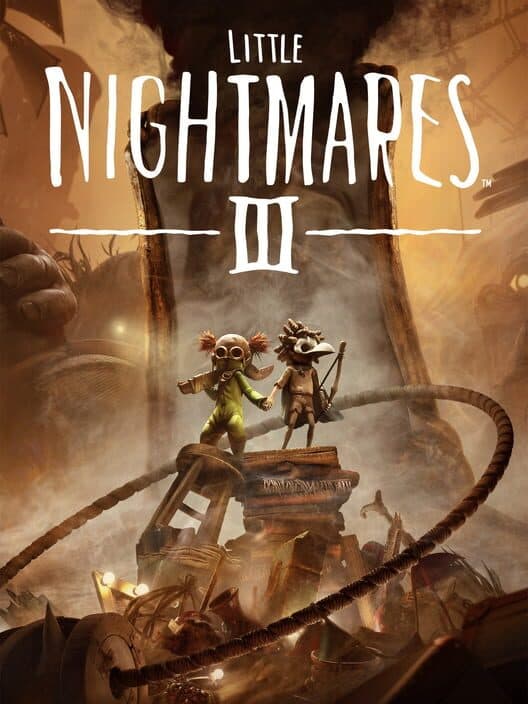
Little Nightmares III is worth it if you want a short, moody horror story more than deep mechanics or a long campaign. Its biggest strengths are its atmosphere and art direction: every area feels like a twisted painting, and the sound design sells the tension even when the gameplay is simple. The campaign is only 4–6 hours, though, so you’re paying for a tightly curated experience rather than lots of content. Difficulty is on the easier side, with quick restarts and forgiving checkpoints, which makes it friendly for tired adults but may disappoint anyone hoping for tough puzzles. Online co-op can be delightful when it works, but it’s online-only and not perfectly stable, so you should be comfortable playing solo. If you love unsettling, artful worlds and like the idea of finishing a whole game in a weekend, full price can make sense. If you mainly care about length, complex systems, or replay value, it’s better as a sale or subscription pick.

Little Nightmares III cover art

Little Nightmares III

Bandai Namco Entertainment • 2025 • Xbox Series X|S, PlayStation 4, Nintendo Switch 2, PC (Microsoft Windows), PlayStation 5, Xbox One, Nintendo Switch

Easy to jump intoClear progression

Is Little Nightmares III Worth It?

Little Nightmares III is worth it if you want a short, moody horror story more than deep mechanics or a long campaign. Its biggest strengths are its atmosphere and art direction: every area feels like a twisted painting, and the sound design sells the tension even when the gameplay is simple. The campaign is only 4–6 hours, though, so you’re paying for a tightly curated experience rather than lots of content. Difficulty is on the easier side, with quick restarts and forgiving checkpoints, which makes it friendly for tired adults but may disappoint anyone hoping for tough puzzles. Online co-op can be delightful when it works, but it’s online-only and not perfectly stable, so you should be comfortable playing solo. If you love unsettling, artful worlds and like the idea of finishing a whole game in a weekend, full price can make sense. If you mainly care about length, complex systems, or replay value, it’s better as a sale or subscription pick.

What is Little Nightmares III like?

What does Little Nightmares III demand from you?

Commitment

LOW

Commitment

A compact four-chapter story you can finish in a few evenings, with flexible solo play and mild friction around online co-op.

LOW

Little Nightmares III is very manageable for a busy adult. A straightforward playthrough takes around 4–6 hours, split into four chapters that each sit nicely in a 45–90 minute session. That makes it easy to treat the game like a short, eerie miniseries you watch over a few nights. Checkpoint-based saves mean you can safely stop after almost any major sequence and resume close to where you left off. Returning after a break is simple: there are no builds or systems to relearn, and chapter select clearly shows your progress and remaining collectibles. Solo play works entirely offline, so you’re not beholden to a friend’s schedule or an internet connection. Online co-op can be a fun way to stretch the experience slightly, but it’s online-only and somewhat prone to disconnects, so it’s best seen as a bonus rather than the main course. Overall, the game asks for a small, focused commitment and gives a complete experience in return.

Tips

  • Plan roughly one chapter per evening when possible; it’s a natural rhythm that keeps the story coherent and satisfying.
  • If your schedule or internet is unreliable, default to solo; you avoid disconnect frustration and can pause freely whenever life interrupts.
  • Use a separate save slot for any co-op or collectible cleanup so your main blind playthrough stays simple and spoiler-light.

Focus

MODERATE

Focus

Light puzzling and navigation most of the time, with short, tense bursts where you really need to watch the screen and react.

MODERATE

Moment to moment, this game asks for a steady but manageable level of attention. Most of your time is spent walking through eerie spaces, scanning for ladders, ledges, switches, and hiding spots, then coordinating simple actions with your companion. The puzzles are rarely complex, but the dark, cluttered environments mean you do need to pay visual attention instead of half-watching another screen. When chases or stealth sections kick in, your focus ramps up: missing a cue or misreading depth can mean a quick death and restart. Thankfully, those intense spikes are brief and separated by calmer stretches of traversal and light problem-solving. For a tired adult, it’s engaging enough to hold your interest without leaving you mentally fried. You probably shouldn’t treat it as a background “podcast game,” but you can comfortably play after work without needing the kind of deep concentration that strategy or competitive titles demand.

Tips

  • Play with the room dimmed and headphones on; audio and lighting cues make it easier to spot important objects in the gloom.
  • If you feel your focus slipping, pause after a chase or big scare; the game usually just autosaved nearby anyway.
  • When returning after a break, spend a minute walking and jumping around a safe room to re-sync with the movement and depth.

Mastery

LOW

Mastery

Very quick to learn, with some satisfaction in cleaner second runs but little long-term depth to study or optimize.

LOW

This is not a game you’ll be “learning” for weeks. The controls are simple—move, jump, grab, call your partner, use a basic tool—and the game introduces them gently in the opening areas. Most adults will feel basically competent within the first session. The main adjustment curve comes from judging depth in the 2.5D space and reading what you can climb or grab in dark rooms. Beyond that, there aren’t many layers to uncover: no combat systems to master, no builds to refine, and only a handful of repeatable enemy patterns. There is still some payoff in getting better. A second run, especially if you chase a few trophies, lets you glide through once-tricky chases, die less, and scoop up missed collectibles efficiently. That can be satisfying, but it’s a weekend project, not a new hobby. If you enjoy gentle improvement and seeing yourself “mess up less,” you’ll get something here; if you crave deep mechanical mastery, you won’t.

Tips

  • Don’t overthink puzzles early on; if you’re stuck, methodically walk the room and try grabbing anything that looks climbable or movable.
  • Use repeated deaths in a chase to map the route mentally; each attempt reveals the next safe platform or hiding spot.
  • If you enjoy feeling improvement, replay a chapter as the other child and aim to cut your deaths or clear it in one sitting.

Intensity

MODERATE

Intensity

Creepy and occasionally sharp, but with quick restarts and a forgiving difficulty that keep tension from turning into constant exhaustion.

MODERATE

Emotionally, Little Nightmares III lives in a middle zone: more unsettling than most action games, but gentler than true horror heavyweights. The tone is grim, with grotesque adults, warped locations, and frequent child peril, yet the stylized visuals keep it from feeling fully realistic. You’ll feel your heart rate jump during sudden chases or close calls, and a few late-game sequences are genuinely nerve-wracking. However, deaths reset you almost instantly, and the game doesn’t drag out punishment, so the stress hits in short spikes instead of grinding you down. Mechanically, the overall difficulty is on the easy-to-medium side, which also softens the emotional load; you’re unlikely to get stuck on a single nightmare room for an entire evening. If you’re sensitive to themes like child endangerment or hanging bodies, the imagery can still be heavy. For most adults, though, the experience leans toward “tense spooky story” rather than “white-knuckle horror you need to recover from.”

Tips

  • If you’re sensitive to child harm or hanging imagery, look up a brief content summary first and consider playing with someone on voice chat.
  • Treat chase deaths as practice runs, not personal failure; expect to die a few times while learning each route.
  • Play in 60–90 minute chunks if tension lingers after sessions, using chapter breaks or big set-pieces as natural stopping points.

Frequently Asked Questions

You Might Also Like

Games with a similar rhythm and feel, even if they look different

Uncharted 4: A Thief's End game cover art
Easy to jump into

Uncharted 4: A Thief's End

Commitment
LOW
Focus
MODERATE
Mastery
LOW
Intensity
MODERATE
Mafia: The Old Country game cover art
Easy to jump intoClear progression

Mafia: The Old Country

Commitment
LOW
Focus
MODERATE
Mastery
LOW
Intensity
MODERATE
Shadow of the Tomb Raider game cover art
Easy to jump intoClear progression

Shadow of the Tomb Raider

Commitment
MODERATE
Focus
MODERATE
Mastery
LOW
Intensity
MODERATE
Tomb Raider game cover art
Easy to jump into

Tomb Raider

Commitment
LOW
Focus
MODERATE
Mastery
LOW
Intensity
MODERATE
A Plague Tale: Requiem game cover art
Easy to jump into

A Plague Tale: Requiem

Commitment
LOW
Focus
MODERATE
Mastery
LOW
Intensity
MODERATE
Alan Wake game cover art
Easy to jump into

Alan Wake

Commitment
LOW
Focus
MODERATE
Mastery
LOW
Intensity
MODERATE
← Back to Home