hello@slated.gg
Powered by IGDB•Privacy•Terms

© 2026 Slated.gg

Slated.gg
Popular GamesAboutDiscover Games
007 First Light

IO Interactive • 2026 • PC (Microsoft Windows), PlayStation 5, Xbox Series X|S, Nintendo Switch 2

Satisfying to completePerfect for a weekendStory-driven
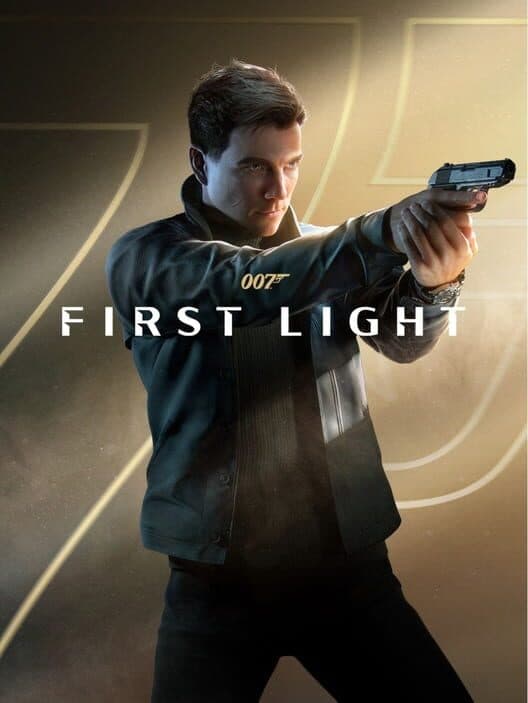
007 First Light cover art

007 First Light

IO Interactive • 2026 • PC (Microsoft Windows), PlayStation 5, Xbox Series X|S, Nintendo Switch 2

Satisfying to completePerfect for a weekendStory-driven

Is 007 First Light Worth It?

007 First Light is worth it if you want a polished, finite Bond adventure rather than a massive forever game. Its best trick is how often it lets you feel clever: reading a room, bluffing past guards, using gadgets well, then recovering when the plan falls apart. The story campaign is the main attraction, and it delivers that big-screen spy fantasy better than most licensed games do. Buy at full price if that fantasy already sounds like your thing and you enjoy story-led action with some stealth freedom. Wait for a sale if you're curious but not committed, if driving sections tend to annoy you, or if launch-window technical hiccups make you cautious. Skip it if you mainly want wide-open sandboxes in every mission, a huge role-playing epic, or something fully screen-safe around children. For most people, the sweet spot is one playthrough of the 16 to 20 hour campaign plus a little mission replay. That is enough to get the core value without turning the game into a second job.

What is 007 First Light like?

Opinions of 007 First Light

What Players Love

  • Players Love

    It finally feels like a real Bond adventure

    Players repeatedly say the mix of gadgets, spycraft, swagger, and set pieces feels true to Bond rather than a simple reskin of another stealth series.

  • Players Love

    Missions reward stealth, bluffing, gadgets, and improvisation throughout

    Fans praise the way encounter spaces support multiple approaches, from quiet infiltration to social deception to sudden action when a plan goes sideways.

Common Concerns

  • Common Concern

    Driving and chase scenes feel weaker than spy missions

    A common complaint is that vehicle sequences feel over-assisted or less interesting than the stealth, gadget, and infiltration sections around them.

  • Common Concern

    Technical hitches can interrupt an otherwise polished campaign

    Players report crashes, disconnects, frame issues, and slower checkpoint reloads in the launch window, even while still praising the game underneath those problems.

Divisive Aspects

  • Divisive

    Linear movie-like pacing splits Bond fans and sandbox fans

    Some players love the guided cinematic structure, while others wanted larger open-ended spaces and less hand-holding from mission to mission.

  • Divisive

    Combat difficulty feels uneven from player to player

    One group finds the default setting surprisingly sharp, while another thinks combat and enemy behavior feel too forgiving, suggesting uneven tuning more than consensus.

What does 007 First Light demand from you?

Time

LOW

Time

This is a finite campaign you can finish in a few weeks, with great pause support but checkpoint saves that reward stopping between major beats.

LOW

For a busy schedule, this is a pretty sensible package. The main campaign is the real meal, and most players will feel satisfied after one run in roughly 16 to 20 hours. That makes it the kind of game you can finish over a few weeks instead of something that quietly turns into a three-month obligation. Missions are chaptered, objectives are clear, and the story moves with enough momentum that it is easy to remember why you are playing. The game asks for regular but not huge chunks of time, then delivers a complete, polished arc rather than a forever treadmill. Day-to-day flexibility is good, with one clear catch. You can pause when life happens, which matters a lot. But because progress leans on checkpoints instead of free manual saves, it is best to stop at a natural break rather than in the middle of a delicate infiltration. Coming back after a week is manageable, though you may need a minute to remember your current objective and gadget setup. Replay mode exists for people who want more, but the story already feels complete on its own.

Tips
  • Plan to stop at checkpoints or chapter ends when possible, since manual saving inside missions is limited and experimentation can be lost.
  • After a week away, spend two minutes checking your objective, gadgets, and last checkpoint before pushing ahead into a live encounter.
  • Treat TacSim as dessert. Finish the story first, then replay missions only if you enjoy refining cleaner runs and better scores.

Focus

MODERATE

Focus

You spend most missions reading rooms, watching patrols, and choosing the cleanest approach, with short bursts of shooting when plans fall apart.

MODERATE

This game asks for steady attention, not absolute tunnel vision. In its best moments, you're studying a space the way Bond should: checking sightlines, listening to guard chatter, spotting devices with the Q-Lens, and deciding whether to bluff, sneak, distract, or fight. That creates a pleasant kind of mental involvement where you feel clever without needing a notebook or a wiki. It asks for awareness and quick judgments, then delivers that satisfying "I handled that smoothly" feeling when a plan works. It is also kind enough to give you breathing room. Story scenes, investigation beats, and traversal stretches break up the heavier moments, so a 90-minute session does not feel like nonstop strain. When stealth collapses, the game shifts into more standard cover shooting and close-quarters action, which raises the pace but still stays manageable for most players. You cannot really half-watch a show while playing, especially during live encounters, but you also do not need the same locked-in concentration as a hard sim or competitive game.

Tips
  • Use the Q-Lens before committing to a route; it highlights useful devices and often reveals an easier plan than your first instinct.
  • Treat each room as a social puzzle first. Guard chatter and positioning often show a safer opening than starting with a takedown.
  • If stealth breaks, use Focus early to stabilize the fight; it works better as a cleanup tool than a last-second panic button.

Challenge

MODERATE

Challenge

Easy enough to grasp in a few sessions, but getting smooth with bluffing, gadgets, and stealth recoveries takes real practice.

MODERATE

This is approachable by modern action-adventure standards. The game does a solid job teaching the basics, and most players will understand the core loop within the first few hours. You move, sneak, scan, talk, shoot, and use gadgets in ways that are readable from the start. What takes longer is learning when the game wants which tool. A room that looks like a firefight might actually be easier as a bluff, and a failed stealth attempt often becomes recoverable if you know how to use Focus, cover, and timing well. That means the learning curve is gentle at first, then pleasantly layered. It asks you to get comfortable with several styles of play working together, then rewards you with smoother runs and smarter improvisation. Mistakes are usually fixable thanks to checkpoints and difficulty options, so the game nudges you to adapt instead of humiliating you. The deeper replay mode adds extra room for mastery, but you do not need to chase perfect scores to enjoy the campaign. Competent play comes quickly. Elegant play takes longer.

Tips
  • Replaying one early mission teaches more than brute-forcing a late one. Lower stakes make it easier to learn patrol logic and gadget timing.
  • If a room feels unfair, change your approach instead of repeating the same failure; many spaces support stealth, bluffing, or loud backup.
  • Use easier replays to test alternate routes and tools. Learning the game's flexibility pays off more than memorizing one perfect path.

Intensity

MODERATE

Intensity

Pressure comes in waves: stealth nerves and flashy firefights, then a breather with dialogue, investigation, or travel before the next spike.

MODERATE

The emotional pull here is exciting more than exhausting. Most of the pressure comes from stealth and escalation. You are not dealing with horror-game dread, but there is a real jolt when a clean infiltration starts slipping and you need to recover fast. That kind of stress feels productive because it usually leads to a cool Bond moment, not just punishment. The game asks for composure during mistakes, then delivers the thrill of turning a bad plan into a stylish escape. Default difficulty sits in a middle lane. It is not a breezy autopilot ride, yet it usually avoids the brick-wall feeling of harder action games. Some players report sharper bumps than expected, especially when combat feel or AI behavior gets messy, which is why the pressure can feel uneven from mission to mission. Still, the overall tone stays adventurous and glossy rather than oppressive. If you like action games that keep you alert without wringing you out, this lands in a very playable zone for weeknights.

Tips
  • Play on Intended or Novice if you want the movie-like fantasy first; higher pressure makes more sense once the systems feel natural.
  • Stop after a big encounter or chapter if your nerves are already up; the game usually offers clean cool-down moments between spikes.
  • When a section starts feeling chaotic, slow down and reset your read of the room instead of forcing a rushed second attempt.

Frequently Asked Questions

007 First Light is moderately hard, not brutally hard. Most players should expect something a bit sharper than the easiest big-budget action games, but nowhere near a Souls-like or a punishing stealth sim. The challenge mostly comes from missions going wrong. A sneaky plan can turn into a firefight fast, and the game asks you to recover instead of collapsing completely. It is also easier to learn than it is to play smoothly. Basic controls and systems come together in the first few hours, especially with the strong onboarding, reminders, and difficulty options. The trickier part is learning when to bluff, when to stay hidden, and when to go loud. That makes it more layered than something like Uncharted 4, but still much more approachable than Hitman at its most systemic. If you like action-adventure games on normal difficulty, you should be fine. If you want a pure power fantasy with little resistance, it may feel spikier than expected. If you enjoy refining missions later, the optional replay mode adds much more room to grow.

Most players will reach the credits in about 16 to 20 hours. If you replay a few favorite missions, sample TacSim, or clean up extra challenges, that can stretch closer to 20 to 25 hours. Going deep on score chasing and mission mastery can push it much higher, but that is optional, not the baseline experience. The good news is that it fits decent weeknight sessions. A typical play block is around 60 to 90 minutes, which is enough for one or two major encounter spaces and the story scene around them. The campaign structure helps because chapters and checkpoints create natural stopping points. The main caveat is saving. You can pause easily, but manual save freedom inside missions is limited, so quitting works best at a checkpoint rather than at any random moment. For most people, this is a few-weeks game, not a months-long commitment. One story run already delivers the core Bond experience, and anything after that is bonus replay value.

007 First Light is more exciting than stressful for most people. Expect steady nerves during stealth, a few pulse-raising firefights, and some flashy chase or escape moments, but not the constant dread of horror or the crushing punishment of a very hard action game. The pressure here is mostly the good kind. You feel it when you are reading guard patterns, trying not to blow your cover, or cleaning up a plan that just went sideways. Those moments can be tense, yet they usually pay off with a cool story beat or a satisfying recovery, not a huge loss of progress. Checkpoints and difficulty options also help keep the bad kind of stress in check. This is a solid pick when you want a cinematic rush without feeling wrung out. It is less ideal if you are looking for a totally cozy, background-friendly game, because active missions do want your attention. Best time to play: when you want some pressure and momentum, but not a full-on ordeal.

Yes. In fact, 007 First Light is built for solo play and works reasonably well as a casual single-player game, with one important caveat. There are no co-op obligations, no raid schedules, and no need to keep up with a competitive scene. You can play at your own pace and still get the full experience. It also handles interruptions better than many action games because you can pause during gameplay and story scenes. That matters if life cuts in suddenly. The catch is that saving is checkpoint-based inside missions, so while short interruptions are easy, full stop-and-resume flexibility is not perfect. You will have a smoother time if you end sessions at a checkpoint or chapter break. Coming back after a few days is also pretty manageable. The story path is clear, and a quick glance at your objective is usually enough to get moving again. So yes, you can absolutely play it casually, especially if you want a polished campaign in steady chunks rather than a hobby game that demands daily commitment.

No, 007 First Light is not pay-to-win. It is a premium single-player game sold as a one-time purchase, and the extra paid content listed so far is cosmetic rather than power-based. Deluxe bonuses and add-ons focus on outfits, gadget skins, and weapon skins, not stronger gear or better mission performance. That matters even more here because the main experience is a solo campaign. There is no direct player-versus-player mode where spending money could give someone a combat advantage over you. Even the replay-focused TacSim side mode centers on score chasing, modifiers, and mastery, and current store information does not point to paid gameplay boosts there either. So the buying decision is simple: pay once for the game, then decide later whether cosmetic extras matter to you. If you ignore all optional purchases, you are not missing core power, core story, or the intended baseline experience. For this kind of game, that is exactly what most players want to hear.

You Might Also Like

Games with a similar rhythm and feel, even if they look different

Explore more→
Metal Gear Solid Delta: Snake Eater game cover art
Satisfying to completePerfect for a weekend

Metal Gear Solid Delta: Snake Eater

Time
MODERATE
Focus
HIGH
Challenge
MODERATE
Intensity
MODERATE
Control game cover art
Satisfying to completePerfect for a weekend

Control

Time
MODERATE
Focus
MODERATE
Challenge
MODERATE
Intensity
MODERATE
Pragmata game cover art
Satisfying to completePerfect for a weekend

Pragmata

Time
LOW
Focus
HIGH
Challenge
MODERATE
Intensity
MODERATE
BioShock: The Collection game cover art
Satisfying to completeStory-driven

BioShock: The Collection

Time
MODERATE
Focus
MODERATE
Challenge
LOW
Intensity
MODERATE
Rise of the Tomb Raider game cover art
Satisfying to completePerfect for a weekend

Rise of the Tomb Raider

Time
MODERATE
Focus
MODERATE
Challenge
LOW
Intensity
MODERATE
Alan Wake game cover art
Satisfying to completePerfect for a weekend

Alan Wake

Time
LOW
Focus
MODERATE
Challenge
LOW
Intensity
MODERATE
← Back to Home