hello@slated.gg
Powered by IGDB•Privacy•Terms

© 2026 Slated.gg

Slated.gg
Popular GamesAboutDiscover Games

Crimson Desert

Pearl Abyss • 2026 • PC (Microsoft Windows), Mac, PlayStation 5, Xbox Series X|S

Rewarding skill growth

Is Crimson Desert Worth It?

Crimson Desert is worth it if the idea of a huge world worth getting lost in sounds better to you than a tight polished campaign. Its best moments come from riding across Pywel, spotting something strange off the road, and finding that the detour actually matters. Combat is the other big selling point. Once the controls start making sense, fights feel weighty, flashy, and flexible in a way many open-world games never quite reach. The catch is that it asks for patience. The opening hours are messy, the controls and menus still frustrate many players, and the story rarely rises to the level of the world itself. Buy at full price if exploration and combat are your main reasons to play and you do not mind learning a rougher, systems-heavy game. Wait for a sale if you are curious but value clean tutorials, strong quest writing, and smoother onboarding. Skip it if you want a low-effort comfort game or a story that carries everything else.

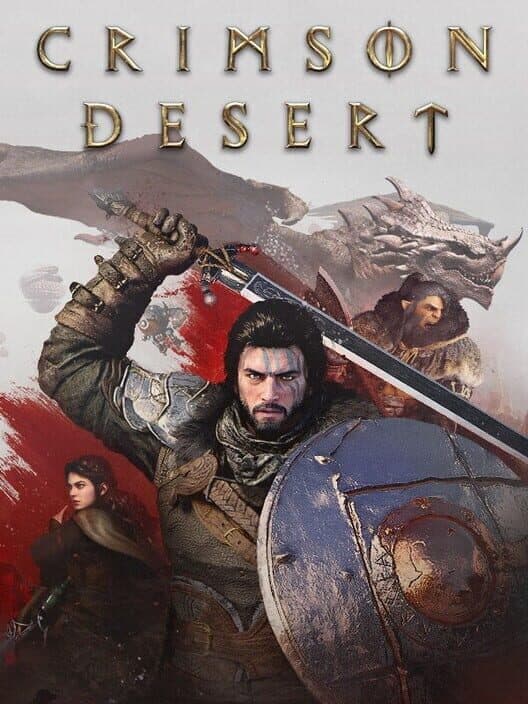
Crimson Desert cover art

Crimson Desert

Pearl Abyss • 2026 • PC (Microsoft Windows), Mac, PlayStation 5, Xbox Series X|S

Rewarding skill growth

Is Crimson Desert Worth It?

Crimson Desert is worth it if the idea of a huge world worth getting lost in sounds better to you than a tight polished campaign. Its best moments come from riding across Pywel, spotting something strange off the road, and finding that the detour actually matters. Combat is the other big selling point. Once the controls start making sense, fights feel weighty, flashy, and flexible in a way many open-world games never quite reach. The catch is that it asks for patience. The opening hours are messy, the controls and menus still frustrate many players, and the story rarely rises to the level of the world itself. Buy at full price if exploration and combat are your main reasons to play and you do not mind learning a rougher, systems-heavy game. Wait for a sale if you are curious but value clean tutorials, strong quest writing, and smoother onboarding. Skip it if you want a low-effort comfort game or a story that carries everything else.

What is Crimson Desert like?

Opinions of Crimson Desert

What Players Love

Common Concerns

Divisive Aspects

Players Love

Pywel makes wandering off the path feel worth it

Players consistently praise the world for turning simple travel into discovery, with striking landscapes, hidden rewards, and fewer map icons pushing you around.

Common Concern

Controls and menus still create the most friction

The most common complaint is overloaded inputs and clumsy interface flow. Patches helped, but many players still find basic actions and navigation fussier than they should be.

Divisive

Its cryptic systems feel deep or simply exhausting

For some, the light hand-holding and dense rules make the game feel fresh and rewarding. For others, that same design turns ordinary progress into avoidable confusion.

Players Love

Combat depth and boss spectacle keep players engaged

Even mixed reviews often highlight the impact, move variety, and big set-piece fights. Once the controls click, battles can carry long stretches of the game.

Common Concern

Story rarely matches the world's sense of wonder

Many players enjoy the setting more than the actual plot. The main journey has memorable moments, but the writing and quest pacing often feel less compelling than exploration.

Players Love

Pywel makes wandering off the path feel worth it

Players consistently praise the world for turning simple travel into discovery, with striking landscapes, hidden rewards, and fewer map icons pushing you around.

Players Love

Combat depth and boss spectacle keep players engaged

Even mixed reviews often highlight the impact, move variety, and big set-piece fights. Once the controls click, battles can carry long stretches of the game.

Common Concern

Controls and menus still create the most friction

The most common complaint is overloaded inputs and clumsy interface flow. Patches helped, but many players still find basic actions and navigation fussier than they should be.

Common Concern

Story rarely matches the world's sense of wonder

Many players enjoy the setting more than the actual plot. The main journey has memorable moments, but the writing and quest pacing often feel less compelling than exploration.

Divisive

Its cryptic systems feel deep or simply exhausting

For some, the light hand-holding and dense rules make the game feel fresh and rewarding. For others, that same design turns ordinary progress into avoidable confusion.

What does Crimson Desert demand from you?

Time

HIGH

Time

It fits into real life surprisingly well night to night, but the full payoff still asks for a long, steady relationship.

HIGH

Crimson Desert is flexible night to night, but substantial over the long haul. The good news is that it works well in real households. You can pause fully, save manually, and rely on frequent autosaves, so a sudden interruption rarely ruins a session. A 60 to 90 minute block is enough to travel, clear a side objective, make progress on the story, and head back to camp or town. The harder part is the bigger arc. This is not a game most people finish in a weekend. To feel like you really got what Pywel offers, you are likely looking at roughly 50 to 80 hours, and even then the map will still have plenty left. Coming back after a week can also be sticky because quests, menus, and controls are not especially easy to re-learn. What it asks from you is sustained interest over weeks and a little patience each time you return. What it delivers is a hobby-like world that keeps handing you new places, fights, and side systems long after the main hook lands.

Tips

  • Plan each session around one main goal and one optional detour; Pywel constantly tries to turn ninety minutes into two hours.
  • After a break, start with travel or a side task before a boss so you can relearn the controls safely.
  • Manual save before long rides, puzzles, or strongholds so interruptions never erase the night's best moment.

Focus

HIGH

Focus

Most sessions need steady attention, quick reads in combat, and a good memory for half-explained systems, even when the world looks calm.

HIGH

Crimson Desert wants your eyes and brain more than most big-budget adventure games. The moment-to-moment ask is mixed. Riding across Pywel can feel calm, but you are still scanning cliffs, ruins, ambushes, puzzle clues, and side paths that can pull you away from your plan. In fights, the load jumps fast. You are reading enemy patterns, watching stamina, choosing when to dodge or block, managing ranged options, and dealing with a control scheme many players still find busy. That makes it a weak fit for second-screen play, even if it is not nonstop chaos. In return, that attention pays off. The world feels rich because wandering actually turns up useful or surprising things, and combat feels expressive once the inputs settle into your hands. If you enjoy staying mentally present and learning a game's strange little habits, it gives back a lot. If you want something you can half-play while tired or distracted, it will feel demanding sooner than it feels comfortable.

Tips

  • End sessions at camp or town and leave a map marker so your next login starts with a clear purpose.
  • Treat strongholds and special puzzle areas as main events; start them early in a session, not in your final tired twenty minutes.
  • Simplify your combat toolkit at first instead of using every move; a smaller reliable set makes fights easier to read.

Challenge

HIGH

Challenge

The big hurdle is learning its crowded controls and loosely taught systems; once that clicks, the game opens up in satisfying ways.

HIGH

The first hurdle is understanding what Crimson Desert wants from you. It throws combat options, traversal tools, gear choices, puzzles, camp systems, and side activities at you early, then explains less than many players expect. So the challenge is not just enemy strength. It is learning how the whole machine fits together. A busy player can become functional within several sessions, but that early stretch may feel clumsy because the controls are crowded and the game often prefers trial and error over clear teaching. Once it clicks, the reward is variety. Fights open up, exploration becomes smarter, and side systems stop feeling like noise. Mistakes are cushioned by regular autosaves and manual saving, which helps a lot, but the road to comfort is still bumpier than in something like Spider-Man or Uncharted. In short, it asks for patience up front and a willingness to experiment. In return, it offers a richer, stranger world than the usual polished but simple blockbuster.

Tips

  • Spend ten minutes in a safe area repeating dodge, timed block, ranged swap, and one combo chain until your hands stop hesitating.
  • Read every new camp upgrade and skill slowly; the game hides useful power in menus more than it should.
  • Sample side systems one at a time so gathering, cooking, and crafting do not blur together into busywork.

Intensity

MODERATE

Intensity

Expect adventurous downtime with sharp spikes of boss-fight stress, not constant panic but definitely more heat than a cozy open-world stroll.

MODERATE

Most of the time, Crimson Desert feels adventurous rather than oppressive. Long rides, camp management, gathering, and exploration give you room to breathe, so it rarely traps you in constant dread. The spikes are real, though. Boss fights can be sharp, pattern-heavy, and messy enough to make your pulse jump, especially when the controls or camera do not fully cooperate. That creates a mix of good stress and bad stress. The good kind comes from finally reading a fight, landing a clean timed block, or surviving a dangerous detour. The bad kind comes from unclear systems, overloaded inputs, or missions that feel rougher than the wandering around them. Because the game saves often, failure usually costs time more than progress, which keeps the pressure from becoming crushing. What it asks from you is tolerance for uneven friction and occasional boss-wall moments. What it delivers is memorable danger without turning every session into an ordeal.

Tips

  • Use wandering nights and boss nights differently. Explore when tired, but save major fights for evenings when you want pressure.
  • If a fight feels messy, back out and restock food or arrows instead of forcing repeated attempts with a bad setup.
  • Bank progress often and stop after a clean save point, not after a frustrated death streak that sours the whole session.

Frequently Asked Questions

You Might Also Like

Games with a similar rhythm and feel, even if they look different
Explore more→
S.T.A.L.K.E.R. 2: Heart of Chornobyl game cover art

S.T.A.L.K.E.R. 2: Heart of Chornobyl

Time
MODERATE
Focus
HIGH
Challenge
MODERATE
Intensity
HIGH
Dragon's Dogma II game cover art

Dragon's Dogma II

Time
HIGH
Focus
HIGH
Challenge
MODERATE
Intensity
MODERATE
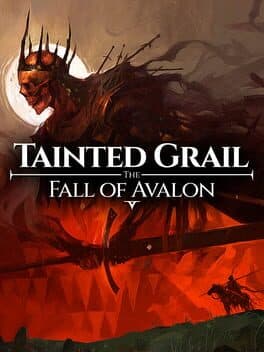
Tainted Grail: The Fall of Avalon game cover art

Tainted Grail: The Fall of Avalon

Time
HIGH
Focus
MODERATE
Challenge
MODERATE
Intensity
MODERATE
Atomfall game cover art

Atomfall

Time
MODERATE
Focus
MODERATE
Challenge
MODERATE
Intensity
MODERATE
Fallout 4 game cover art

Fallout 4

Time
MODERATE
Focus
MODERATE
Challenge
MODERATE
Intensity
MODERATE
Ghost of Yotei game cover art

Ghost of Yotei

Time
MODERATE
Focus
MODERATE
Challenge
MODERATE
Intensity
MODERATE
← Back to Home