hello@slated.gg
Powered by IGDB•Privacy•Terms

© 2026 Slated.gg

Slated.gg
Popular GamesAboutDiscover Games

Tomodachi Life: Living the Dream

Nintendo • 2026 • Nintendo Switch
Satisfying to completeEasy to pick back upRelaxing & low-pressure

Is Tomodachi Life: Living the Dream Worth It?

Tomodachi Life: Living the Dream is worth it if turning friends, family, celebrities, and nonsense originals into a tiny sitcom sounds delightful. Its best trick is how personal the humor becomes once your island has a strong cast. A crush, a fight, or a bizarre news report lands harder when the people involved are your own creations. The catch is that you have to meet the game halfway. The tasks are simple, the pace is slow, and longer sessions can feel repetitive if you are not excited by making Miis, decorating spaces, and nudging social chaos. Buy at full price if you already love character creators, life sims, and low-stress nightly check-ins. Wait for a sale if you mostly want a funny novelty game or you are unsure how much you enjoy self-directed sandbox play. Skip it if you want strong story momentum, deep strategy, or lots of fresh variety in marathon sessions.

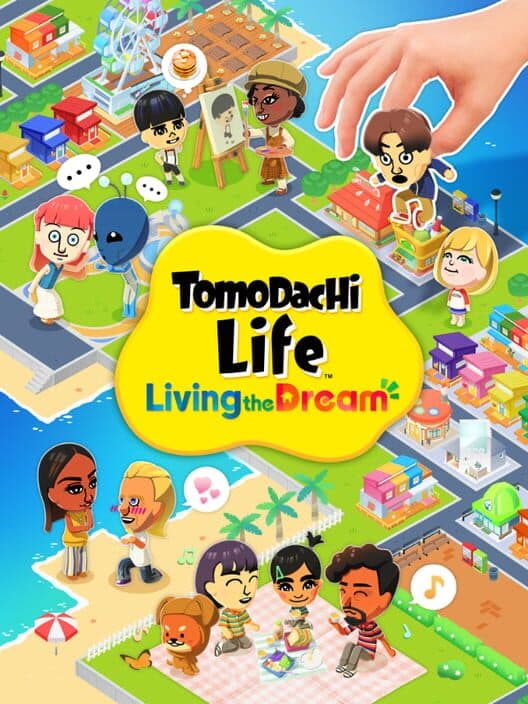
Tomodachi Life: Living the Dream cover art

Tomodachi Life: Living the Dream

Nintendo • 2026 • Nintendo Switch

Satisfying to completeEasy to pick back upRelaxing & low-pressure

Is Tomodachi Life: Living the Dream Worth It?

Tomodachi Life: Living the Dream is worth it if turning friends, family, celebrities, and nonsense originals into a tiny sitcom sounds delightful. Its best trick is how personal the humor becomes once your island has a strong cast. A crush, a fight, or a bizarre news report lands harder when the people involved are your own creations. The catch is that you have to meet the game halfway. The tasks are simple, the pace is slow, and longer sessions can feel repetitive if you are not excited by making Miis, decorating spaces, and nudging social chaos. Buy at full price if you already love character creators, life sims, and low-stress nightly check-ins. Wait for a sale if you mostly want a funny novelty game or you are unsure how much you enjoy self-directed sandbox play. Skip it if you want strong story momentum, deep strategy, or lots of fresh variety in marathon sessions.

What is Tomodachi Life: Living the Dream like?

Opinions of Tomodachi Life: Living the Dream

What Players Love

Common Concerns

Divisive Aspects

Players Love

Expanded creator tools make your island feel truly yours

Players widely praise the deeper Mii editor, face paint, clothing, pets, and layout options. The extra control makes jokes, look-alikes, and self-made casts land better.

Common Concern

Repetition shows up fast in longer play sessions

Many players enjoy the game more in bursts than marathons. Requests, minigames, and daily rhythms can start to repeat once the first wave of novelty wears off.

Divisive

More player control means less hands-off surprise for some

Some players love the added customization and island editing. Others miss a stronger feeling of Miis running wild on their own without as much setup from the player.

Players Love

Unexpected Mii drama keeps even short check-ins funny

The best moments come from crushes, odd news reports, and strange social pairings. When your cast clicks, even a ten-minute visit can produce a story worth retelling.

Common Concern

Limited sharing tools dull a game built for stories

Funny moments often feel made to show friends, so players notice the restricted screenshot and video workflow. The social side feels narrower than the island drama suggests.

Players Love

Expanded creator tools make your island feel truly yours

Players widely praise the deeper Mii editor, face paint, clothing, pets, and layout options. The extra control makes jokes, look-alikes, and self-made casts land better.

Players Love

Unexpected Mii drama keeps even short check-ins funny

The best moments come from crushes, odd news reports, and strange social pairings. When your cast clicks, even a ten-minute visit can produce a story worth retelling.

Common Concern

Repetition shows up fast in longer play sessions

Many players enjoy the game more in bursts than marathons. Requests, minigames, and daily rhythms can start to repeat once the first wave of novelty wears off.

Common Concern

Limited sharing tools dull a game built for stories

Funny moments often feel made to show friends, so players notice the restricted screenshot and video workflow. The social side feels narrower than the island drama suggests.

Divisive

More player control means less hands-off surprise for some

Some players love the added customization and island editing. Others miss a stronger feeling of Miis running wild on their own without as much setup from the player.

What does Tomodachi Life: Living the Dream demand from you?

Time

LOW

Time

Short daily or weekly check-ins fit perfectly, and one good island season can feel complete without turning the game into a forever habit.

LOW

This game asks for recurring small visits more than huge blocks of time, and that is why it fits busy schedules so well. A typical session can be ten to thirty minutes: clear current thought bubbles, check the shops, watch a strange scene, maybe make one new gift or character, and call it a night. If you fall into the editor or island tools, that can stretch to an hour or more, but it never feels like you must keep going. The structure creates natural stopping points even without hard missions. Saving appears mostly automatic, which helps short sessions, though the one-save-file setup is less flexible than a true save-anywhere, multi-slot system. Coming back after a week is easy because the island immediately shows you what changed and what needs attention. There are no party obligations, raid schedules, or competitive ladders pulling you in. One good island season across a few weeks is enough for most people to feel satisfied.

Tips

  • Think in 15-minute laps
  • Stop after bubbles clear
  • Name Miis memorably

Focus

VERY LOW

Focus

Easy to play half-relaxed, with most attention going toward making funny Miis and noticing social surprises rather than tracking threats, combos, or complex plans.

VERY LOW

This game asks for light, curious attention and pays it back with personalized comedy. In most sessions, you are not studying maps or reacting under pressure. You are scanning thought bubbles, choosing a few gifts or foods, checking the shops, and seeing what odd relationship beat pops next. That makes it very friendly to lower-energy nights. You can look away for a moment, pause, or stop mid-routine without feeling lost. The one place attention climbs is during creation. If you start shaping a friend's face, writing silly phrases, or rearranging parts of the island, the game shifts from passive checking-in to deliberate tinkering. Even then, it is more about taste and amusement than brain strain. Think of it as a cozy loop that asks for a little imagination and observation, then rewards you with tiny stories that feel funnier because you helped set them up.

Tips

  • Clear bubbles before decorating
  • Do creator work separately
  • Use short evening check-ins

Challenge

VERY LOW

Challenge

You can understand the basics in one evening; the deeper skill is learning how to build a cast and island that keep generating good jokes.

VERY LOW

This is an easy game to learn, and it stays easy in the traditional sense. It asks for creative buy-in more than technical skill, then rewards that effort with a better island and funnier scenes. The basics come together quickly: add Miis, solve simple requests, raise happiness, unlock new spots, repeat. If you have played Animal Crossing or The Sims, the learning curve feels gentler than most management games and far less punishing than farming sims with heavy planning. What takes longer is not mastery of rules but figuring out what kind of cast makes the island come alive for you. A careful look-alike, a ridiculous voice, or a well-chosen outfit can matter more than any system trick. That also means the ceiling is personal. Players who love making characters will keep finding new ways to improve the experience, while players who want clearer challenges may feel like they already understand everything after a few hours. Mistakes are soft, so experimentation is encouraged from the start.

Tips

  • Start with a small cast
  • Use quick-create for extras
  • Let weird ideas stay

Intensity

VERY LOW

Intensity

This is comfort-food play: almost no punishment, tiny bits of social suspense, and a tone that stays goofy even when Miis bicker or chase romance.

VERY LOW

Tomodachi Life stays calm almost all the time, and that is a big part of its appeal. It asks for patience with randomness, not nerves of steel, then gives back a low-stress stream of surprises. A Mii might get a crush, two residents may clash, or a shop item may rotate out before your next visit, but those moments create mild curiosity rather than real pressure. There is almost no punishment for mistakes, no harsh fail state hanging over routine play, and no need to brace yourself before logging in. Even the conflict is framed as comedy. The only real risk is marathon fatigue. If you play for too long, the repeated requests and joke structure can start to feel more tiring than tense. This is best when you want something soft, silly, and a little mischievous instead of something demanding. It works especially well as an end-of-day game because it rarely asks you to recover after a session.

Tips

  • Play when you want comfort
  • Ignore missed shop items
  • Stop before novelty dips

Frequently Asked Questions

You Might Also Like

Games with a similar rhythm and feel, even if they look different
Explore more→
Animal Crossing: New Horizons game cover art
Satisfying to completeEasy to pick back up

Animal Crossing: New Horizons

Time
LOW
Focus
VERY LOW
Challenge
VERY LOW
Intensity
VERY LOW
Stardew Valley game cover art
Relaxing & low-pressureSatisfying to complete

Stardew Valley

Time
MODERATE
Focus
LOW
Challenge
LOW
Intensity
VERY LOW
Spiritfarer game cover art
Relaxing & low-pressureSatisfying to complete

Spiritfarer

Time
MODERATE
Focus
LOW
Challenge
LOW
Intensity
VERY LOW
Dinkum game cover art
Satisfying to completeRelaxing & low-pressure

Dinkum

Time
MODERATE
Focus
LOW
Challenge
LOW
Intensity
VERY LOW
Discounty game cover art
Satisfying to completeRelaxing & low-pressure

Discounty

Time
MODERATE
Focus
MODERATE
Challenge
LOW
Intensity
VERY LOW
My Time at Sandrock game cover art
Relaxing & low-pressureLighthearted & fun

My Time at Sandrock

Time
HIGH
Focus
MODERATE
Challenge
MODERATE
Intensity
VERY LOW
← Back to Home