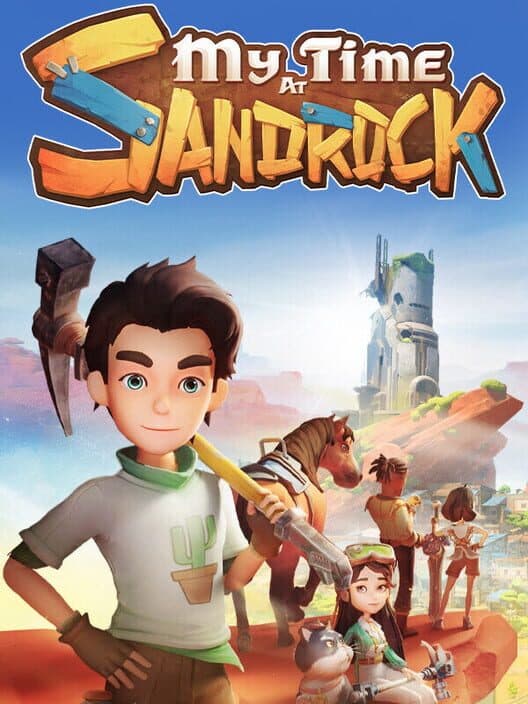
PM Studios • 2023 • PlayStation 4, PC (Microsoft Windows), PlayStation 5, Xbox One, Nintendo Switch, Xbox Series X|S
My Time at Sandrock is worth it if you love steady progress, likable townsfolk, and the satisfying feeling of making a messy system finally run well. Its best trick is turning ordinary evenings into a string of small wins: a finished commission, a new machine, a friendship scene, a town problem solved because of your work. If that sounds good, full price makes sense on PC or stronger hardware. If you're unsure about long crafting games or you plan to play on weaker consoles, waiting for a sale is the safer move. What it asks from you is patience with a grindier opening, a lot of recipe chains, and a campaign that is much longer than the average cozy game. What it gives back is routine with momentum, a stronger cast than most workshop sims, and a real sense that your labor matters. Skip it if you want fast action, short sessions with hard endings, or a pure chill game with almost no upkeep.

PM Studios • 2023 • PlayStation 4, PC (Microsoft Windows), PlayStation 5, Xbox One, Nintendo Switch, Xbox Series X|S
My Time at Sandrock is worth it if you love steady progress, likable townsfolk, and the satisfying feeling of making a messy system finally run well. Its best trick is turning ordinary evenings into a string of small wins: a finished commission, a new machine, a friendship scene, a town problem solved because of your work. If that sounds good, full price makes sense on PC or stronger hardware. If you're unsure about long crafting games or you plan to play on weaker consoles, waiting for a sale is the safer move. What it asks from you is patience with a grindier opening, a lot of recipe chains, and a campaign that is much longer than the average cozy game. What it gives back is routine with momentum, a stronger cast than most workshop sims, and a real sense that your labor matters. Skip it if you want fast action, short sessions with hard endings, or a pure chill game with almost no upkeep.
Players love the cycle of taking commissions, refining parts, unlocking new machines, and seeing both your yard and the town improve a little every session.
Frame drops, pop-in, long loads, and occasional bugs come up often on consoles and lower-power hardware, so platform choice can shape the experience a lot.
Some players love how long the town arc and workshop growth last, while others feel the layered systems and overall length push past cozy into upkeep.
Friendship events and romance options land well because the cast stays tied to the main story, making chats, gifts, and side moments feel genuinely worthwhile.
Water, fuel, scarce materials, and multi-step recipes can slow the first stretch, especially before better machines and wider area access smooth out the routine.
Many players enjoy getting a long, substantial journey with lots of upgrades and story beats instead of a cozy game that runs out of fresh goals too quickly.
Players love the cycle of taking commissions, refining parts, unlocking new machines, and seeing both your yard and the town improve a little every session.
Friendship events and romance options land well because the cast stays tied to the main story, making chats, gifts, and side moments feel genuinely worthwhile.
Many players enjoy getting a long, substantial journey with lots of upgrades and story beats instead of a cozy game that runs out of fresh goals too quickly.
Frame drops, pop-in, long loads, and occasional bugs come up often on consoles and lower-power hardware, so platform choice can shape the experience a lot.
Water, fuel, scarce materials, and multi-step recipes can slow the first stretch, especially before better machines and wider area access smooth out the routine.
Some players love how long the town arc and workshop growth last, while others feel the layered systems and overall length push past cozy into upkeep.
It fits weeknights better than its long campaign suggests, thanks to day-sized stopping points, easy saves, and a solo-first structure.
This is a long game that still fits real life fairly well. A satisfying run usually means seeing the main story through and turning your workshop into a reliable machine, which often lands around 50 to 70 hours. That sounds hefty, but the structure is friendly to weeknights. One in-game day, one commission, or one assembly project gives you natural stopping points, and single-player pause plus manual saving make it easy to step away. The real time risk is not rigidity. It is momentum. Sandrock is excellent at making you say one more day because tomorrow's commission board, machine outputs, and research results are always just around the corner. Returning after a break is manageable but not instant. You may need a few minutes to remember which parts you were stockpiling and what the town needed next. Social pressure is basically nonexistent because the campaign is designed for solo play, with co-op as an optional side path. It asks for many weeks of steady play and returns a strong sense of living in, and gradually improving, a place.
Most nights feel like relaxed juggling, checking machines, choosing errands, and watching the clock, with short combat bursts that rarely demand full action-game concentration.
This asks for steady attention more than total lock-in. A typical session has you collecting finished parts, scanning the commission board, checking which machines are free, and deciding whether the evening is best spent mining, scavenging, socializing, or pushing a story quest. That light planning never fully goes away, because one missing part can send you across town or back into the ruins. The good news is that most of this thinking is calm and practical. You are organizing, not panicking. Short fights and dungeon trips raise the demand for a few minutes, but they are usually breaks in the workshop loop rather than the whole point. It is also fairly kind to distracted play by single-player standards. You can pause cleanly, town time is not dangerous, and many chores are low risk. Still, the clock keeps moving when unpaused, so this is not the kind of game you half-watch while doing something else. It asks for steady list-making and returns the satisfying feeling of ending a night with real progress.
The trick is learning production chains and town routines, not mastering brutal combat, so the early hours feel busier than the game eventually becomes.
The biggest hurdle is learning how all the moving pieces connect. Early on, the game throws machine recipes, research, stamina, water, fuel, commissions, gifts, and light combat at you in quick succession. None of those systems are especially cruel on their own, but together they can make the first several evenings feel more cluttered than cozy. The good part is that the game gets easier as your understanding grows. Once you know where core materials come from, which machines deserve duplicates, and how to keep a buffer of common parts, the whole workshop starts to hum. Combat stays manageable on normal settings, so the lasting skill is planning ahead, not mastering tight inputs. It asks for patience up front and pays you back with competence that feels earned. Because setbacks are small, the learning process usually feels like smoothing out bottlenecks rather than slamming into walls. Players who enjoy building routines will likely find the curve satisfying. Players who hate multi-step crafting chains may bounce before that comfort arrives.
This feels busy-cozy rather than nerve-racking, with small deadlines, light combat, and a few story spikes that keep you engaged without wearing you out.
Most of the time, this feels busy-cozy instead of stressful. The pressure comes from small deadlines, not disaster. You want to finish a commission before the board resets, get enough water and fuel for tomorrow, or squeeze one more ore run out of the day. That creates a gentle hum of urgency that keeps the routine lively. It rarely becomes overwhelming because mistakes are recoverable. Missing an order, getting knocked out in combat, or misjudging a recipe usually costs time and efficiency, not a crushing setback. The biggest spikes come from story dungeons, boss fights, or town emergencies, but those moments are short and spaced out. For most players, the emotional rhythm is closer to pleasantly busy than on edge. That makes it great when you want something engaging after work without the drained feeling of a punishing action game. The trade is that even cozy nights have a little background pressure. If your ideal relaxation game has zero deadlines and zero maintenance, Sandrock may feel more structured than its warm art style first suggests.
Games with a similar rhythm and feel, even if they look different