Capcom • 2026 • Xbox Series X|S, Nintendo Switch 2, PC (Microsoft Windows), PlayStation 5
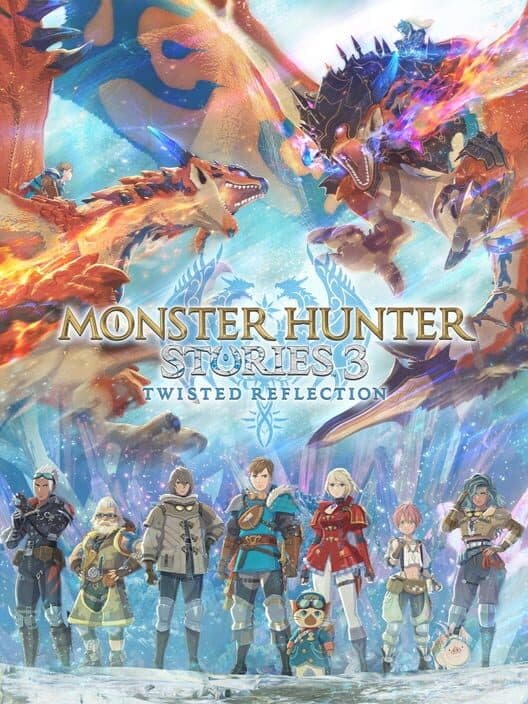
Yes—if you want a monster adventure that respects your brain more than your reflexes, Monster Hunter Stories 3: Twisted Reflection is worth it. Its best trick is turning hunts into readable turn-based duels while still giving you the joy of collecting eggs, raising Monsties, and shaping a party that feels like yours. The story also lands better than many expected, with a more mature tone and stronger voice work than earlier entries. What it asks from you is attention: you need to read attack patterns, tune your team, and accept a few difficulty spikes without an easy mode safety net. What it gives back is a satisfying 35-50 hour journey that feels complete at the credits, not like homework before the 'real' game starts. Buy at full price if smart turn-based combat and build tinkering sound exciting, and you do not care about co-op. Wait for a sale if you mainly want a cozy collector or you are worried about early PC stability. Skip it if you wanted multiplayer or a very low-pressure ride.

Capcom • 2026 • Xbox Series X|S, Nintendo Switch 2, PC (Microsoft Windows), PlayStation 5
Yes—if you want a monster adventure that respects your brain more than your reflexes, Monster Hunter Stories 3: Twisted Reflection is worth it. Its best trick is turning hunts into readable turn-based duels while still giving you the joy of collecting eggs, raising Monsties, and shaping a party that feels like yours. The story also lands better than many expected, with a more mature tone and stronger voice work than earlier entries. What it asks from you is attention: you need to read attack patterns, tune your team, and accept a few difficulty spikes without an easy mode safety net. What it gives back is a satisfying 35-50 hour journey that feels complete at the credits, not like homework before the 'real' game starts. Buy at full price if smart turn-based combat and build tinkering sound exciting, and you do not care about co-op. Wait for a sale if you mainly want a cozy collector or you are worried about early PC stability. Skip it if you wanted multiplayer or a very low-pressure ride.
Players keep praising how battles reward reading attack patterns, targeting body parts, and managing stamina, making fights feel closer to a real hunt.
Even players who enjoy the campaign often call the missing multiplayer and lack of a traditional High Rank-style postgame a noticeable step back from the previous game.
Some players love that fights demand real planning, while others hit frustrating spikes because there are no difficulty settings to smooth the road.
Many players say den runs lead to 'just one more' play, as new eggs, gene choices, and Habitat Restoration upgrades keep feeding the next goal for hours.
Crash reports and demo-save transfer problems appeared often enough during launch week to drag down enthusiasm on PC, even though patches started arriving quickly.
Early feedback often highlights the more serious war-and-ecology story, stronger character writing, and fuller voice work as real upgrades over prior entries.
Players keep praising how battles reward reading attack patterns, targeting body parts, and managing stamina, making fights feel closer to a real hunt.
Many players say den runs lead to 'just one more' play, as new eggs, gene choices, and Habitat Restoration upgrades keep feeding the next goal for hours.
Early feedback often highlights the more serious war-and-ecology story, stronger character writing, and fuller voice work as real upgrades over prior entries.
Even players who enjoy the campaign often call the missing multiplayer and lack of a traditional High Rank-style postgame a noticeable step back from the previous game.
Crash reports and demo-save transfer problems appeared often enough during launch week to drag down enthusiasm on PC, even though patches started arriving quickly.
Some players love that fights demand real planning, while others hit frustrating spikes because there are no difficulty settings to smooth the road.
A full run fits into regular weeknight play, with strong pause support, decent save handling, and a story that feels finished at the credits.
This is a manageable medium-length project, not an endless second job. Most people looking for the main story plus a healthy amount of side content will land somewhere around 35 to 50 hours, which makes it a good month-long game if you play a few nights a week. Sessions fit well into an hour or hour and a half because chapters, dens, side quests, and town returns all create natural stopping points. It also helps that the game is single-player only, fully pausable, and backed by frequent autosaves. Manual saving is not completely freeform, so it is convenient rather than perfect, but real-life interruptions are usually easy to handle. The bigger time cost is remembering your setup after a break. If you step away for a week, you may need a short warm-up to remember why your team is built the way it is and what the next monster wants from you. The upside is that the credits feel like a real ending. You can keep hunting and tuning builds afterward, but you do not need a giant postgame to feel satisfied.
Thoughtful turn-based hunts ask for steady attention, pattern reading, and team planning, but they rarely demand fast hands or constant panic.
This game asks for steady, thoughtful attention rather than fast hands. In most fights, you are reading what a monster is likely to do next, matching the right attack type, watching stamina, and deciding whether to hit a body part, swap gear, or bring in a different Monstie. Even outside battle, you are making light but constant calls about den detours, egg quality, side quests, and restoration upgrades. That means you can play tired, but not fully distracted. It is friendlier than an action game because turns wait for you and the whole thing pauses cleanly, yet it is not a background-TV game either. The payoff for that attention is great: battles feel like little hunts you solve, not menu mashing. When the systems click, every smart read feels earned. If you like turn-based games that reward noticing patterns and making a plan, this is very satisfying. If you want something you can half-play while multitasking, it will ask for more of your brain than its colorful art style first suggests.
The basics come quickly, but real confidence takes time as monster tells, stamina use, body-part breaks, and Monstie builds start fitting together.
The learning curve sits in a nice middle space. You can understand the basics quickly, but real comfort takes a while because the game layers several ideas together: the attack-type triangle, body-part targeting, weapon choice, stamina management, Monstie swapping, and later gene planning. Early on, that can make fights feel a bit busier than they look. The good news is that the game usually teaches by letting you experiment in normal play instead of demanding a guide. It is harder to pick up than a breezy monster collector, but far less punishing than games built around repeated failure. The biggest bump is that there are no difficulty settings at launch, so if a boss exposes a weakness in your setup, you may need to stop and rebuild instead of simply lowering the challenge. What you get for pushing through that learning phase is a combat system with real texture. Each new monster stops feeling like a stat check and starts feeling like a readable opponent. If you enjoy noticing patterns and improving your team step by step, the growth feels very rewarding.
Expect steady tactical pressure with a few sharper spikes, not horror-level stress; it is engaging, tense at times, and usually more measured than exhausting.
The emotional load here is moderate and mostly healthy. Most of the time, the game creates a steady 'can I read this monster correctly?' pressure rather than panic. Boss fights and special hunts can get tense, especially when your current team has the wrong elemental coverage or you realize a monster keeps baiting the same bad response. The story also adds more weight than the series usually does, with war, grief, and ecological stakes giving the adventure a slightly older feel. Still, the turn-based pace keeps the mood from becoming exhausting. You are usually thinking through trouble, not white-knuckling through it. Losing a fight hurts because it wastes time and momentum, not because it destroys hours of progress. That makes the game a good fit when you want something engaging after work without the full-body stress of a fast action game. It is not cozy enough to melt into the background, but it also does not constantly spike your pulse. Expect measured pressure with occasional sharper peaks.
Games with a similar rhythm and feel, even if they look different