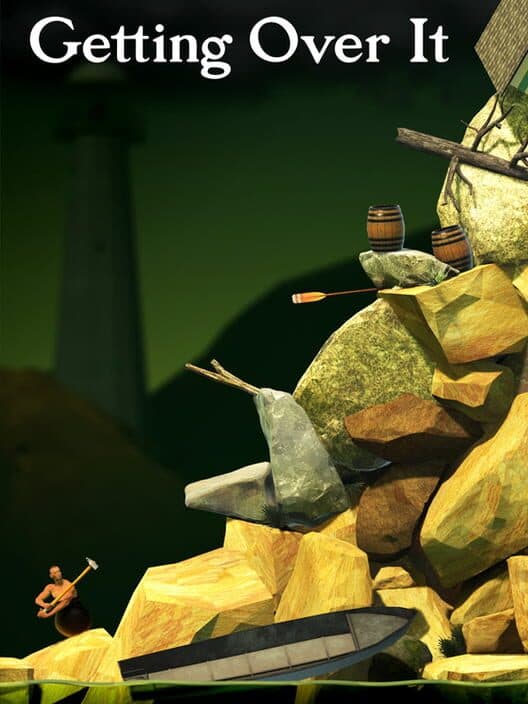
Bennett Foddy • 2017 • PC (Microsoft Windows), Mac, Android, iOS, Linux
Yes, if you want a compact but unforgettable test of patience and mouse control. Getting Over It is worth full price for people who enjoy mastery games, weird physics, and the kind of win that feels earned in your hands, not granted by levels or loot. Its special trick is how one simple tool keeps opening up: at first the hammer feels ridiculous, then it slowly becomes something you can actually think with. What it asks from you is steep. Falls can erase huge chunks of progress, the control scheme is deliberately awkward, and this is a terrible choice if you want to relax after a draining day. The mountain is short, but the emotional ride through it can be intense. The good news is that it saves your exact spot, so you can chip away at it in real sessions. Buy at full price if harsh challenge sounds exciting and you like proving you can do hard things. Wait for a sale if you are curious but unsure about frustration-heavy games. Skip it if repetition, mouse precision, or big setbacks make you miserable.

Bennett Foddy • 2017 • PC (Microsoft Windows), Mac, Android, iOS, Linux
Yes, if you want a compact but unforgettable test of patience and mouse control. Getting Over It is worth full price for people who enjoy mastery games, weird physics, and the kind of win that feels earned in your hands, not granted by levels or loot. Its special trick is how one simple tool keeps opening up: at first the hammer feels ridiculous, then it slowly becomes something you can actually think with. What it asks from you is steep. Falls can erase huge chunks of progress, the control scheme is deliberately awkward, and this is a terrible choice if you want to relax after a draining day. The mountain is short, but the emotional ride through it can be intense. The good news is that it saves your exact spot, so you can chip away at it in real sessions. Buy at full price if harsh challenge sounds exciting and you like proving you can do hard things. Wait for a sale if you are curious but unsure about frustration-heavy games. Skip it if repetition, mouse precision, or big setbacks make you miserable.
Players often say even tiny gains feel bigger than wins in longer games because progress comes from your own improved control, not levels, loot, or unlocks.
The most common complaint is losing major progress in seconds after one mistake. Even players who admire the design often say these drops can wreck a session.
Fans love the no-compromise design and the way it turns persistence into the point. Others see the same idea as repetitive frustration with little payoff.
Many players praise how one odd mouse-driven tool creates a feel they remember for years. Even critics often admit the movement system is unlike anything else.
A large group of players never make peace with the movement. They describe it as awkward, tiring, or physically uncomfortable rather than pleasantly challenging.
The running commentary gives failures a funny, reflective tone. For many players, it keeps the game from feeling mean and makes setbacks part of the joke.
Players often say even tiny gains feel bigger than wins in longer games because progress comes from your own improved control, not levels, loot, or unlocks.
Many players praise how one odd mouse-driven tool creates a feel they remember for years. Even critics often admit the movement system is unlike anything else.
The running commentary gives failures a funny, reflective tone. For many players, it keeps the game from feeling mean and makes setbacks part of the joke.
The most common complaint is losing major progress in seconds after one mistake. Even players who admire the design often say these drops can wreck a session.
A large group of players never make peace with the movement. They describe it as awkward, tiring, or physically uncomfortable rather than pleasantly challenging.
Fans love the no-compromise design and the way it turns persistence into the point. Others see the same idea as repetitive frustration with little payoff.
It resumes easily and works in short sessions, but the mountain has no clean chapters, so stopping feels best when you reach safety.
Getting Over It asks for less calendar time than its reputation suggests, but it can demand a lot from a single evening. The mountain is short, and a first summit often lands within several sessions rather than dozens. It also remembers your exact position, so you can quit and return without replaying old ground. That makes it much easier to fit around real life than many long challenge games. Ten minutes can matter, though thirty to sixty works better because your hand usually needs a few minutes to warm back up. The catch is that the climb has few clean endings. There are no missions, chapters, or tidy round breaks. You usually stop because you reached a safe perch, hit a personal milestone, or took a fall harsh enough to drain the fun. Coming back later is simple in terms of remembering what to do, since the goal never changes. The real question is mood, not schedule. This works well as a personal project you chip away at solo. It works poorly if you want a reliably soothing game at the end of a hard day.
You need steady hands and full screen attention, but the thinking stays narrow: read surfaces, judge angles, and keep the hammer under control.
Getting Over It asks for steady hands and almost complete visual attention, then rewards that effort with a rare feeling of direct physical mastery. You are not juggling enemies, maps, loot, or long lists of abilities. Instead, nearly every active second is about one tight loop: place the hammer, read the surface, judge the angle, and decide whether to pull, push, hook, or stop. That narrow setup sounds simple, but it leaves very little room for autopilot. A tiny overreach can turn into a long fall. The thinking is less about fast problem solving and more about motion judgment. You keep scanning the next foothold, predicting where momentum will send you, and choosing when patience matters more than ambition. Because the mountain is fixed, you do build familiarity over time, but active play still wants your full eyes-on-screen presence. The good news is that the clutter stays low. Once the controls begin to click, the game can shift from mentally noisy to oddly meditative, with all your attention pulled into a single strange tool.
The rules make sense in seconds, but comfort takes hours. Progress comes from repetition, calmer inputs, and accepting that big mistakes will hurt.
The rules are easy to explain and hard to live with. You move one hammer with the mouse, and the whole game asks you to turn that awkward setup into reliable control. That means the early hours can feel rough. You understand what the game wants almost immediately, but your hands usually cannot do it yet. The payoff for sticking with it is unusually clean: progress comes from calmer inputs, better spacing, and better recovery, not from leveling up or finding stronger gear. This is not a mystery box full of hidden systems. The challenge comes from repetition, body memory, and learning how the hammer behaves against different surfaces. You slowly pick up safer ways to settle, push, and rescue bad situations, and those lessons matter more than flashy moves. The game is also harsh about mistakes. Failure teaches clearly, but it does not cushion the lesson. If that sounds appealing, the climb can feel honest and even beautiful. If you need gentler onboarding or frequent rewards, it can feel like the game is shutting the door in your face.
Few games hit this hard without enemies; long falls create dread, flashes of anger, and a huge rush when you finally stick it.
This game hits hard for something with no enemies, no combat, and almost no story. It asks you to live with risk, frustration, and the constant possibility that one clumsy movement will erase a long stretch of progress. In return, it delivers enormous emotional spikes. Safe landings feel like relief. New landmarks feel like triumph. Huge falls can feel like getting the wind knocked out of a whole evening. The stress here comes from punishment and anticipation, not spectacle. Most of the time, you are not being chased. You are being haunted by what might happen if your next swing is just slightly off. That creates a special kind of pressure: quieter than an action game, but often just as intense. It can also flip quickly. A calm, careful climb can become anger or disbelief in a second. That makes the game memorable, but it also means it is a poor fit when you want pure comfort. Played in the right mood, though, that harsh edge is exactly what makes the eventual success feel so powerful.
Games with a similar rhythm and feel, even if they look different