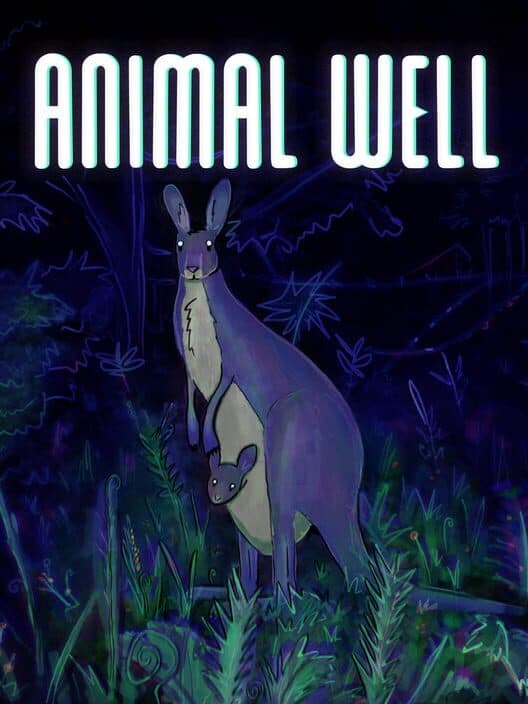
Bigmode • 2024 • PC (Microsoft Windows), PlayStation 5, Nintendo Switch, Xbox Series X|S
Animal Well is worth it if you love discovery more than instruction. Its best trick is how often it makes you feel clever without spelling things out. Small toy-like tools keep revealing new uses, the map folds back on itself in satisfying ways, and even short sessions can end with a great realization. Buy at full price if your favorite games reward curiosity, quiet observation, and secret hunting. This is a standout if you enjoy wandering through a place that slowly makes sense in your head. Wait for a sale if you like exploration but get frustrated by backtracking or very light guidance. The deeper optional secrets do become much more obscure than the main path. Skip it if you mainly want combat, strong story scenes, or a clear checklist telling you exactly where to go next. For the right player, it is one of the smartest and most memorable small adventures of the last few years.

Bigmode • 2024 • PC (Microsoft Windows), PlayStation 5, Nintendo Switch, Xbox Series X|S
Animal Well is worth it if you love discovery more than instruction. Its best trick is how often it makes you feel clever without spelling things out. Small toy-like tools keep revealing new uses, the map folds back on itself in satisfying ways, and even short sessions can end with a great realization. Buy at full price if your favorite games reward curiosity, quiet observation, and secret hunting. This is a standout if you enjoy wandering through a place that slowly makes sense in your head. Wait for a sale if you like exploration but get frustrated by backtracking or very light guidance. The deeper optional secrets do become much more obscure than the main path. Skip it if you mainly want combat, strong story scenes, or a clear checklist telling you exactly where to go next. For the right player, it is one of the smartest and most memorable small adventures of the last few years.
Players love that detours rarely feel wasted. Shortcuts, hidden rooms, and clever connections keep turning simple exploration into fresh realizations.
Many players feel the deepest post-credit riddles cross the line from clever to guide-heavy, especially if you prefer solving everything on your own.
Some players love being trusted to figure things out alone. Others find the repeated revisits and memory demands tiring when the game offers few direct hints.
Items that seem simple at first later unlock traversal tricks and puzzle solutions. That steady feeling of discovery is one of the game's biggest strengths.
The sparse soundscape, glowing pixel art, and strange animal encounters create a mood that feels charming and unsettling without heavy story scenes.
Players love that detours rarely feel wasted. Shortcuts, hidden rooms, and clever connections keep turning simple exploration into fresh realizations.
Items that seem simple at first later unlock traversal tricks and puzzle solutions. That steady feeling of discovery is one of the game's biggest strengths.
The sparse soundscape, glowing pixel art, and strange animal encounters create a mood that feels charming and unsettling without heavy story scenes.
Many players feel the deepest post-credit riddles cross the line from clever to guide-heavy, especially if you prefer solving everything on your own.
Some players love being trusted to figure things out alone. Others find the repeated revisits and memory demands tiring when the game offers few direct hints.
Credits come quickly, but sessions work best when you can play deliberately and reach a save phone before stopping for the night.
Animal Well is a compact game with a messy, fascinating tail. Most players can reach credits in about 8 to 15 hours, which makes the main journey very manageable. The trick is that it plays best in deliberate chunks. You can pause instantly for real life, but progress is safest when you reach a telephone and save before quitting. Because of that, 60 to 90 minutes feels like the sweet spot, even if shorter sessions are possible. It is also a very personal, solo-paced experience. There are no social obligations, no scheduled group play, and no competitive treadmill pulling you back. The bigger time cost comes later if you step away for a week. With almost no recap or quest tracking, returning players often spend a few minutes rebuilding the map in their head. What it asks from you is steady, self-directed play and a bit of memory between sessions. What it gives back is a satisfying stopping point at credits, plus optional deeper secrets if you want to keep digging.
Most rooms reward close observation and quiet experimentation, not speed. You'll want your full attention on the screen, especially when exploring somewhere new.
Animal Well asks for close attention almost the whole time, and that attention is mostly thoughtful rather than frantic. You are scanning rooms for odd ledges, hidden switches, unusual creature behavior, and tiny details that may only make sense hours later. The game gives very little hand-holding, so a lot of play is about forming hunches, testing them, and remembering where a strange dead end might become useful after you find a new tool. That means it does not pair especially well with half-watching TV or checking your phone every few minutes. The controls are simple and the action rarely becomes truly fast, but the game keeps rewarding players who stay mentally present. Even small rooms can matter. A suspicious corner, a strange sound, or the way an item moves might be the clue that opens the next stretch of the map. What it asks from you is patient observation and spatial memory. What it delivers back is one of the best steady aha loops in recent games.
Easy controls hide a trickier mental climb. Learning what each tool can really do is the heart of getting comfortable here.
The hardest part of Animal Well is not learning how to jump or use an item. It is learning how the game thinks. Early on, tools can seem simple or even gimmicky. A few hours later, those same tools may solve movement problems, reveal hidden routes, or interact with creatures in ways the game never plainly spells out. That shift is where the real learning happens. The good news is that the basic controls are approachable and the punishment is usually reasonable. You can experiment, fail, and try again without losing everything. The rougher part is opacity. When you get stuck, the answer is often to observe better, revisit an old room, or test an item in a less obvious way. For some players, that feels brilliant. For others, it feels sticky and slow. What it asks from you is patience, curiosity, and a willingness to read the same spaces with new eyes. What it gives back is the rare feeling that your own understanding, not a bigger stat bar, is the real upgrade.
It feels eerie and watchful more than brutal. The stress comes from uncertainty and sudden chases, not from constant punishment or overwhelming pressure.
Animal Well feels more eerie than punishing. Most of the time the tension comes from not knowing what a creature will do, what a dark room is hiding, or whether a strange setup is harmless or dangerous. A few chase sequences and sudden deaths can jolt you, but the game is usually building unease instead of pure panic. That balance matters. It is not a cozy, fully relaxed background game, yet it is also nowhere near survival horror or a brutally demanding action game. Failure usually costs a bit of time and a walk back, not a huge loss of progress or resources. Because of that, the pressure stays readable. You can feel nervous without feeling crushed. What it asks from you is a willingness to sit with uncertainty and mild suspense. What it gives back is a strong sense of mood. The darkness, strange animals, and quiet sound design make discovery feel more meaningful because every new room carries a little danger.
Games with a similar rhythm and feel, even if they look different