hello@slated.gg
Powered by IGDB•Privacy•Terms

© 2026 Slated.gg

Slated.gg
Popular GamesAbout

Alchemy Factory

Gamirror Games • 2025 • PC (Microsoft Windows)

Relaxing & low-pressureCreative expression

Is Alchemy Factory Worth It?

Alchemy Factory is worth it if calm automation sounds relaxing to you and a little Early Access roughness does not scare you off. Its best trick is shrinking the big factory fantasy into a cozy, vertical workshop that stays readable even when it gets complex. Sessions feel productive: one night you fix a bottleneck, the next you turn that fix into a reusable blueprint, and slowly your shop starts running itself. What it asks from you is patience with layered production chains, rebuild-heavy midgame stretches, and tutorials that do not always explain every new item well. The biggest caution is technical trust; crashes and save worries are still the main reason to wait. Buy at full price if solving logistics problems sounds soothing and you can tolerate a game that is still being polished. Wait for a sale or more patches if save stability matters a lot to you. Skip it if you dislike manual setup, slow-burn progression, or games where the fun comes from redesigning the same space until it finally clicks.

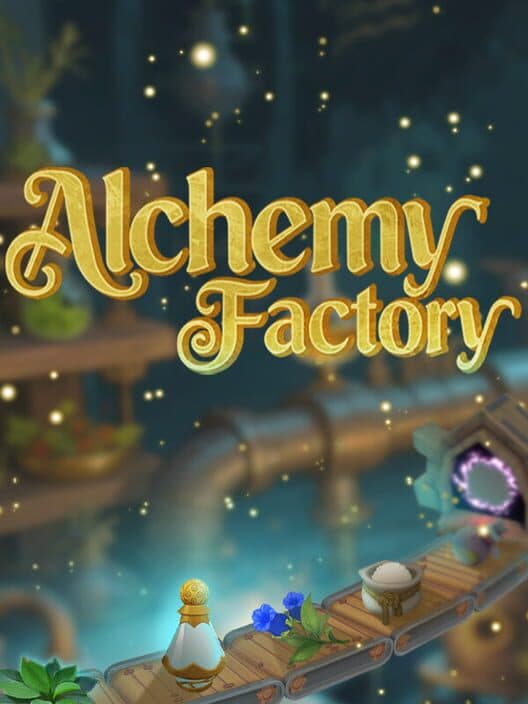
Alchemy Factory cover art

Alchemy Factory

Gamirror Games • 2025 • PC (Microsoft Windows)

Relaxing & low-pressureCreative expression

Is Alchemy Factory Worth It?

Alchemy Factory is worth it if calm automation sounds relaxing to you and a little Early Access roughness does not scare you off. Its best trick is shrinking the big factory fantasy into a cozy, vertical workshop that stays readable even when it gets complex. Sessions feel productive: one night you fix a bottleneck, the next you turn that fix into a reusable blueprint, and slowly your shop starts running itself. What it asks from you is patience with layered production chains, rebuild-heavy midgame stretches, and tutorials that do not always explain every new item well. The biggest caution is technical trust; crashes and save worries are still the main reason to wait. Buy at full price if solving logistics problems sounds soothing and you can tolerate a game that is still being polished. Wait for a sale or more patches if save stability matters a lot to you. Skip it if you dislike manual setup, slow-burn progression, or games where the fun comes from redesigning the same space until it finally clicks.

What is Alchemy Factory like?

Opinions of Alchemy Factory

What Players Love

Common Concerns

Divisive Aspects

Players Love

Cozy factory building stays relaxing and absorbing for hours

Players love how the game turns bottleneck fixing into a calm nightly ritual. It feels soothing rather than frantic, yet still has that strong just-one-more-fix pull.

Common Concern

Late-game progression can become rebuild-heavy and oddly balanced

A recurring complaint is that later tiers ask for too much tearing down and rebuilding. Some recipes and cauldron-heavy solutions make the curve feel less elegant than early hours.

Divisive

Relaxed early pace feels cozy or too manual

Some players enjoy the gentle ramp and hands-on early work. Others say stronger automation tools arrive too late, making the opening hours feel slower than expected.

Players Love

Compact vertical layouts make blueprint building especially satisfying

Fans often praise the small footprint and multi-floor design. Reusable blueprints and Workshop sharing make clever layouts practical, fast to reuse, and fun to show off.

Common Concern

Tutorial gaps leave new players searching outside the game

The manual helps, but players still report confusion around item uses, unlock purpose, and chain setup. Quite a few say they needed guides or Google to keep moving.

Common Concern

Crashes and save trust issues remain the biggest risk

Even positive players call technical stability the main caution. Reports mention crashes, pause hangs, and save anxiety, especially after the rough early patch period.

Players Love

Cozy factory building stays relaxing and absorbing for hours

Players love how the game turns bottleneck fixing into a calm nightly ritual. It feels soothing rather than frantic, yet still has that strong just-one-more-fix pull.

Players Love

Compact vertical layouts make blueprint building especially satisfying

Fans often praise the small footprint and multi-floor design. Reusable blueprints and Workshop sharing make clever layouts practical, fast to reuse, and fun to show off.

Common Concern

Late-game progression can become rebuild-heavy and oddly balanced

A recurring complaint is that later tiers ask for too much tearing down and rebuilding. Some recipes and cauldron-heavy solutions make the curve feel less elegant than early hours.

Common Concern

Tutorial gaps leave new players searching outside the game

The manual helps, but players still report confusion around item uses, unlock purpose, and chain setup. Quite a few say they needed guides or Google to keep moving.

Common Concern

Crashes and save trust issues remain the biggest risk

Even positive players call technical stability the main caution. Reports mention crashes, pause hangs, and save anxiety, especially after the rough early patch period.

Divisive

Relaxed early pace feels cozy or too manual

Some players enjoy the gentle ramp and hands-on early work. Others say stronger automation tools arrive too late, making the opening hours feel slower than expected.

What does Alchemy Factory demand from you?

Time

MODERATE

Time

It fits weeknight sessions surprisingly well, but the workshop becomes a long-running project that asks for several weeks and some relearning after breaks.

MODERATE

This is a long-form project, but it is one you can play in chunks. A good session often has a clear short-term goal, like fixing bottle supply or automating a newly unlocked product, even if the bigger workshop stays unfinished. Manual saves and autosaves make it much more workable for busy schedules than a live service game or something that needs a standing group. Even so, it is not a perfect drop-in game. Because your factory is hand-built and multi-floor, returning after a week away can mean a slow reorientation lap before you remember what each line does. The game also tends to create one-more-fix momentum, so planned 60-minute sessions can stretch. Most players who feel satisfied seem to stop after a long first run, not a single weekend. It asks for repeated evenings over several weeks and some tolerance for coming back into a complex save. In return, it gives steady progress, meaningful small wins, and a workshop that truly feels like yours.

Tips

  • Plan sessions around one target, like fixing bottles or automating fertilizer. That turns a huge workshop into a satisfying 60-minute win.
  • End nights with a manual save after the factory stabilizes, not mid-demolition, so your next login starts from a readable state.
  • If you take a week off, do a slow walkthrough first and reopen the manual before changing anything. It cuts down on costly return mistakes.

Focus

MODERATE

Focus

Most of the fun comes from tracing bottlenecks and rethinking layouts in your head, with almost no need for fast hands but plenty of real attention.

MODERATE

This is a planner's game, not a reflex test. Most sessions are spent tracing supply problems, remembering recipe links, and deciding whether to patch a line or rebuild it properly. Because you move through the workshop in first person, diagnosis is physical as well as mental: you walk belts, inspect machines, and spot where shelves, pipes, or floor space are choking output. The good news is that almost nothing demands split-second input. You can slow down, close the shop, and think. The harder part is holding the whole workshop in your head once several floors and product chains are running at once. That makes it a strong fit when you want quiet concentration and a poor fit when you're half-watching TV. It asks for steady attention, spatial planning, and comfort with trial and error. In return, it delivers that excellent moment when one smart change suddenly fixes three hidden problems.

Tips

  • Walk the full floor before changing anything, so you solve the real bottleneck instead of rebuilding three lines that only looked related.
  • Close the shop during big refactors; it removes pressure and lets you trace belts, pipes, and shelves without reputation sliding further.
  • Turn reliable sub-lines into blueprints early, so repeated rebuilds become quick swaps instead of another whole evening of manual placement.

Challenge

MODERATE

Challenge

You can get useful lines running fairly early, but deeper confidence grows slowly as recipes, ratios, and floor planning stack into a rewarding yet murky curve.

MODERATE

Learning it is medium-hard, but not because it demands fast hands. The first few hours teach the basics well enough, and you can get simple production lines running without expert knowledge. Real confidence takes longer because later unlocks start leaning on ratios, space planning, and item chains the game does not always explain clearly. You are often learning by building a small test line, watching what jams, then rebuilding smarter. That can feel rewarding if you like figuring systems out, and tiring if you want everything clearly spelled out. The game is forgiving about most mistakes, since bad layouts can usually be fixed rather than permanently punished. Still, the current Early Access state means technical issues can make experimentation feel riskier than intended. It asks you to accept imperfect builds, learn in layers, and improve through iteration. In return, it delivers a strong sense of ownership because every efficient floor feels like knowledge you actually earned.

Tips

  • Read the manual when a new part unlocks, then build a tiny test line first. Small prototypes teach faster than refactoring whole floors blind.
  • Keep simple notes for ratios and item purpose; returning later is much easier when your own factory explains itself.
  • Aim for working, not perfect. The game opens up faster if you accept temporary spaghetti and clean it up after automation settles.

Intensity

VERY LOW

Intensity

The mood stays calm and cozy, with pressure coming from your own production goals and occasional technical hiccups rather than danger, timers, or punishing setbacks.

VERY LOW

The emotional temperature stays low most of the time. This is not a game that spikes your heart rate with enemies, timers, or sudden failure. Most pressure comes from your own goals: keeping shelves filled, protecting reputation, and untangling a production chain that looked fine ten minutes ago. That creates a gentle kind of stress, closer to solving a stubborn household project than surviving a boss fight. When things go wrong, you usually lose efficiency, time, or a bit of progress, not the entire run. The main exception is technical roughness. Crashes or save worries can create the bad kind of stress because they sit outside the normal play loop. If the build is stable for you, the game is easy to settle into on a weeknight. It asks for patience with rebuilds and occasional confusion. In return, it gives a calm, absorbing flow state and the quiet pride of seeing a once-chaotic workshop run smoothly.

Tips

  • Treat slowdowns as diagnosis, not emergencies. Most problems are stock-flow issues you can stabilize by pausing sales or hand-feeding one machine.
  • Use Sandbox Mode to test unfamiliar chains if your main save feels frustrating; it teaches systems without risking your working factory.
  • Save before big tech jumps or layout overhauls, especially in the current Early Access build where technical hiccups still matter.

Frequently Asked Questions

You Might Also Like

Games with a similar rhythm and feel, even if they look different

Timberborn game cover art
Creative expression

Timberborn

Time
MODERATE
Focus
MODERATE
Challenge
MODERATE
Intensity
LOW
Cities: Skylines game cover art
Creative expression

Cities: Skylines

Time
MODERATE
Focus
MODERATE
Challenge
MODERATE
Intensity
LOW
Two Point Hospital game cover art

Two Point Hospital

Time
MODERATE
Focus
MODERATE
Challenge
MODERATE
Intensity
LOW
Nova Roma game cover art
Creative expression

Nova Roma

Time
MODERATE
Focus
MODERATE
Challenge
HIGH
Intensity
LOW
Cities: Skylines II game cover art
Relaxing & low-pressureCreative expression

Cities: Skylines II

Time
MODERATE
Focus
MODERATE
Challenge
HIGH
Intensity
VERY LOW
Manor Lords game cover art

Manor Lords

Time
MODERATE
Focus
MODERATE
Challenge
HIGH
Intensity
LOW
← Back to Home