Sony Computer Entertainment • 2007 • PlayStation 3
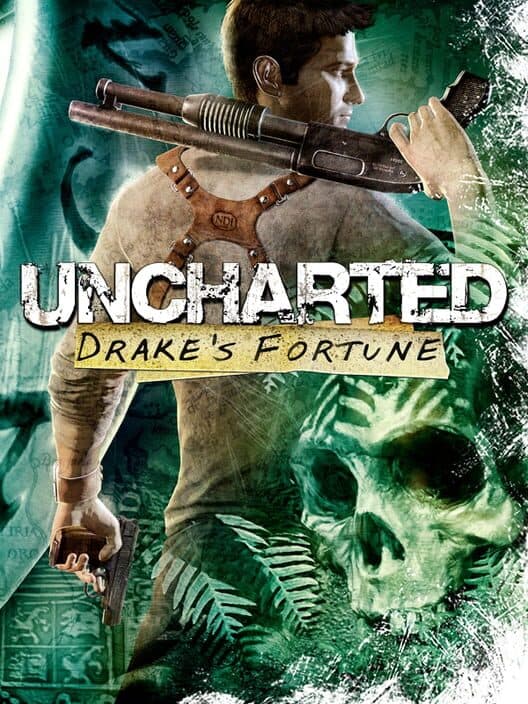
Uncharted: Drake's Fortune
Sony Computer Entertainment • 2007 • PlayStation 3
Is Uncharted: Drake's Fortune Worth It?
Yes, Uncharted: Drake's Fortune is still worth playing if you want a short, guided adventure with real charm and you can tolerate some 2007 rough edges. Its best quality is momentum. You move from ruins to jungle paths to firefights with very little downtime, and Nathan, Elena, and Sully do a lot of work to keep the ride fun even when the mechanics show their age. What it asks from you is pretty reasonable: about 8 to 10 hours, steady attention during combat, and patience for aiming and cover that feel less polished than later entries. What it gives back is a complete, finishable story with strong banter, clear goals, and easy weeknight pacing. If you love modern smoothness above all else, wait for a very low price or skip it. If you are curious about the series and enjoy compact action stories, it is an easy recommendation on sale or as part of a collection. Full price only makes sense if you specifically want the start of Drake's story and are happy meeting an older game on its own terms.
What is Uncharted: Drake's Fortune like?
Opinions of Uncharted: Drake's Fortune
What Players Love
- Players Love
Nathan, Elena, and Sully make the adventure easy to love
Players consistently say the main trio's chemistry keeps the story moving. Their jokes and back-and-forth give even simple climbing and combat scenes extra charm.
- Players Love
The short, cinematic campaign is easy to actually finish
Many players like that the whole journey wraps up in a handful of evenings. It moves briskly, hits regular story beats, and rarely feels like a huge life commitment.
Common Concerns
- Common Concern
Aiming and cover feel rough by modern standards
The most common complaint is that shooting lacks the smoothness of later third-person action games. Clunky cover snaps and older aiming can make fights feel less satisfying.
- Common Concern
Too many firefights can wear down the adventure
A frequent criticism is that discovery and story give way to repeated enemy waves. When combat dominates too often, the treasure-hunt mood can start to feel diluted.
- Common Concern
Jet ski sequences are widely seen as a weak spot
Even positive players often call out the vehicle stretches as awkward. The controls and pacing break from the rest of the game in ways many find more irritating than exciting.
Divisive Aspects
- Divisive
The late tonal shift splits players more than anything
Some enjoy the pulpy escalation and extra suspense, while others feel it clashes with the earlier mood. It is a memorable turn, but not a universally loved one.
What does Uncharted: Drake's Fortune demand from you?
Time
LOWTime
A compact solo adventure that fits weeknight play well, with clear chapter breaks, easy re-entry, and no social obligations to schedule around.
Focus
MODERATEFocus
Mostly asks for steady eyes-on-screen action awareness, then relaxes between fights with simple climbing, light puzzles, and very little system overhead to remember.
Challenge
LOWChallenge
Easy to learn, mildly harder to finish cleanly, with most friction coming from dated gunfeel rather than deep mechanics or punishing design.
Intensity
MODERATEIntensity
Feels like a lively action movie with moderate pressure, a few rough spikes, and enough checkpoints to keep failure annoying instead of crushing.
Frequently Asked Questions
You Might Also Like
Games with a similar rhythm and feel, even if they look different