Rocket League

Psyonix2015Xbox Series X|S, PlayStation 4, Linux, PC (Microsoft Windows), PlayStation 5, Mac, Xbox One, Nintendo Switch
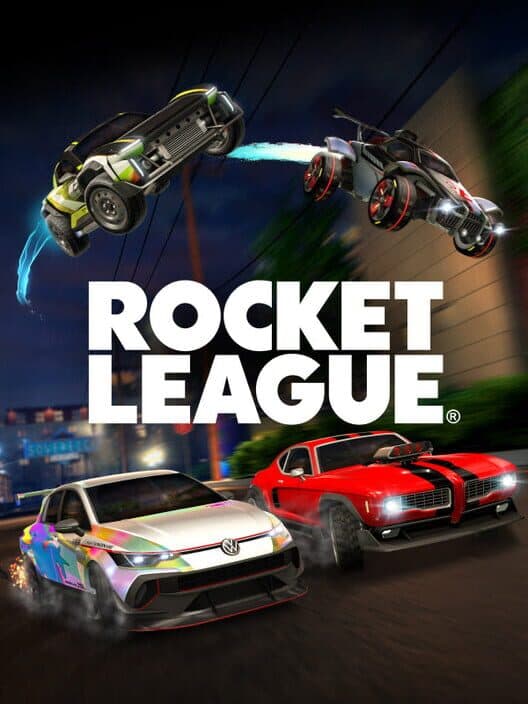
Fast five-minute competitive car soccer

Easy to start, endlessly deep skills

Best with friends, still fun solo

Is Rocket League Worth It?

Rocket League is absolutely worth trying for most busy adults, especially because the base game is free and the core loop is so tight. If you enjoy competitive games that feel like a real sport, where improvement is mostly about your own coordination and decision-making, it delivers a huge amount of value in short sessions. The tradeoff is that it’s intense: you need to focus, you’ll lose often, and there’s no story or exploration to break the tension. Players who mainly want narrative, calm puzzles, or open-world wandering will likely bounce off quickly. But if the idea of five-minute matches that test your reflexes and reward practice sounds appealing, this is one of the best options available. It’s friendly to hop in and out of, generous about failure, and never demands money to stay competitive. Buy cosmetic items only if you fall in love with it; otherwise, you can easily treat Rocket League as a long-term, zero-cost staple in your gaming rotation.

When is Rocket League at its best?

When you have 45–60 minutes after work and want something active rather than relaxing, a handful of matches gives you a great competitive outlet without committing to a long story arc.

When a couple of friends are online and you all want lighthearted teamwork and banter, queueing casual 3v3 together turns short matches into a regular game night ritual.

When you’re between big single-player games but still crave something satisfying in 20–30 minute chunks, Rocket League works perfectly as a low-friction, always-available side game.

What is Rocket League like?

From a time and scheduling perspective, Rocket League is one of the friendliest competitive games you can pick. Standard matches are five minutes long, plus maybe a minute of stoppage time and queues, so a single game is usually under ten minutes door to door. That makes it easy to fit one or two matches into a tight evening or play a handful over a 60–90 minute window. Once a match starts, though, you’re locked in: there’s no pause, and leaving early hurts your teammates and can cause penalties in ranked. The game saves everything automatically between matches, and there’s no story or quest log to remember, so coming back after weeks away is painless—just warm up and play. Live seasons and cosmetic passes exist, but they’re optional rather than requirements. Overall, it asks for focused but flexible chunks of time, not long marathons or rigid schedules, which lines up well with adult life as long as you can protect each five-minute block.

Tips

  • Plan sessions around natural life breaks, like after kids’ bedtime, so you can finish each match without constant real-world interruptions.
  • Decide your stop time before you start and treat the current or next match as the last instead of getting sucked into “one more game” loops.
  • If your life is very interruptible, favor offline or casual modes, where leaving doesn’t punish teammates or risk matchmaking penalties.

Rocket League sits in that zone where your brain is locked in almost the entire time you’re in a match. Every few seconds you’re checking the ball’s position, your own speed, teammates, opponents, and your boost, then making quick choices about whether to challenge, rotate back, or grab resources. There’s almost no “comfortably coasting” while you scroll your phone or chat with someone in the room; look away for a couple of seconds and you might concede a goal. The thinking it asks for is more spatial and reactive than long-term planning, closer to sports than strategy games. Between games you get 30–60 second breaks to breathe, review stats, and decide whether to queue again, which helps keep the intensity from feeling overwhelming. For a busy adult, this means it works best when you have real mental energy to spare. It’s not the game to half-watch with a show in the background, but it’s fantastic when you want something that fully absorbs you for an hour.

Tips

  • Give yourself a five-minute warm-up in Free Play or training packs so your eyes and hands sync before jumping into real matches.
  • Avoid multitasking during games; save texts, snacks, or conversations for the short breaks between matches when nothing important is happening.
  • If you feel your focus slipping, treat that as a natural stopping point instead of forcing one more match and making yourself frustrated.

In terms of learning, Rocket League is classic “easy to pick up, hard to truly be good at.” You’ll understand the rules in minutes: drive into the ball, hit it into the goal, try not to whiff. Within your first couple of evenings you’ll probably feel like you’re at least contributing—getting ball touches, making saves, sometimes scoring. That early ramp is smoother than in many shooters or fighting games. Over time, though, you’ll see just how high the ceiling goes. Controlling your car in the air, managing your camera, recovering quickly from awkward landings, and rotating properly with teammates can take tens or hundreds of hours to really internalize. The upside is that improvement is very visible: shots you used to miss suddenly become reliable, and games that once felt chaotic start to look readable. If you enjoy practicing physical skills and seeing steady personal growth, the game rewards that mindset enormously. If you’d rather not grind mechanics, you can still have fun, but you’ll plateau earlier.

Tips

  • Focus on one skill per week, like basic aerials or rotations, instead of trying to learn every advanced trick at once.
  • Mix three to five minutes of targeted training before each session with actual matches so practice transfers directly into real situations.
  • Track progress by what you can do consistently, not by rank alone; plateaus are normal and often precede noticeable breakthroughs.

Emotionally, Rocket League is a pressure cooker packed into five-minute slices. Matches are usually close because the matchmaking targets a roughly 50% win rate, so every mistake feels immediately visible and often leads to a goal against you. Last-minute equalizers, sudden overtime, and visible rank changes can easily spike your heart rate, especially if you’re competitive by nature. The good news is that the stakes per game are small: you’re never losing hours of story progress, just one short match. That keeps most of the tension in the “good adrenaline” zone rather than full-blown dread. Stress ramps up notably in ranked play, where pride and visible tiers are on the line, and drops a bit in casual or bot games. For many adults, a session feels like playing a high-energy sport: exciting, occasionally frustrating, and tiring in a way that’s different from work stress. If you’re already frazzled, it might be more intense than you want; if you crave a competitive outlet, it scratches that itch very efficiently.

Tips

  • When you feel really frustrated after a bad game, step away for five minutes or switch to Free Play instead of immediately queuing again.
  • Prefer casual playlists or bot matches on nights when you are tired or anxious; save ranked games for when you feel sharper.
  • Mute quick chat or other players entirely if comments are raising your blood pressure; your focus and mood matter more than banter.

Frequently Asked Questions