Powered by IGDB•Privacy•Terms

© 2026 Slated.gg

Slated.gg
Popular GamesAbout

Return to Monkey Island

Devolver Digital • 2022 • Xbox Series X|S, Linux, Android, PC (Microsoft Windows), iOS, PlayStation 5, Mac, Nintendo Switch
Gentle but steady puzzle thinking

Low-stress, story-driven evenings

Highly pause-friendly, interruption safe

Is Return to Monkey Island Worth It?

Return to Monkey Island is absolutely worth it if you like clever puzzles, sharp writing, and games that respect your limited time. It’s a tightly crafted, 8–12 hour adventure you can comfortably finish over a few weeks of evenings, with almost no filler or grind. The main draw is the combination of witty dialogue, memorable characters, and satisfying “aha” puzzle moments, all wrapped in a warm, nostalgic pirate tale. In return, it asks mainly for patient thinking and a tolerance for occasional confusion when puzzles don’t click right away. There’s no combat, no grinding for gear, and no pressure to log in daily, so it’s easy to fit around work and family. Longtime Monkey Island fans will get extra emotional payoff from the meta ending and returning faces, making it a strong full-price buy. If you’re just curious or only mildly into puzzle adventures, it’s still a great pick—but you might prefer to grab it on sale, since replay value after one playthrough is modest. If you dislike reading-heavy, puzzle-driven games altogether, you can comfortably skip it.

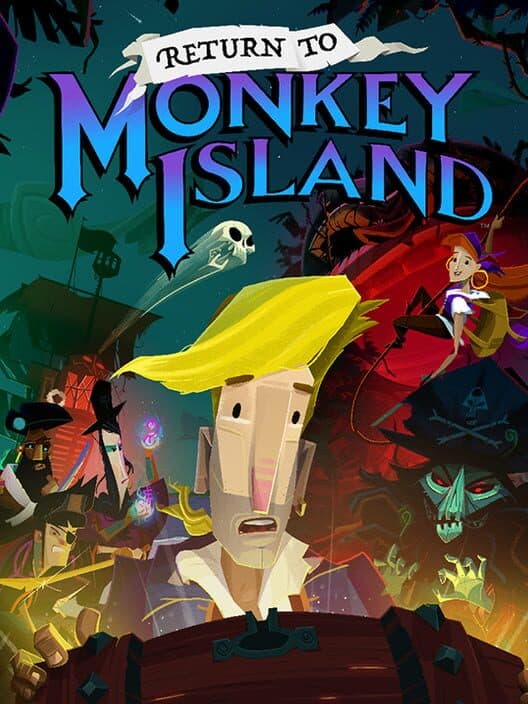
Return to Monkey Island cover art

Return to Monkey Island

Devolver Digital • 2022 • Xbox Series X|S, Linux, Android, PC (Microsoft Windows), iOS, PlayStation 5, Mac, Nintendo Switch

Gentle but steady puzzle thinking

Low-stress, story-driven evenings

Highly pause-friendly, interruption safe

Is Return to Monkey Island Worth It?

Return to Monkey Island is absolutely worth it if you like clever puzzles, sharp writing, and games that respect your limited time. It’s a tightly crafted, 8–12 hour adventure you can comfortably finish over a few weeks of evenings, with almost no filler or grind. The main draw is the combination of witty dialogue, memorable characters, and satisfying “aha” puzzle moments, all wrapped in a warm, nostalgic pirate tale. In return, it asks mainly for patient thinking and a tolerance for occasional confusion when puzzles don’t click right away. There’s no combat, no grinding for gear, and no pressure to log in daily, so it’s easy to fit around work and family. Longtime Monkey Island fans will get extra emotional payoff from the meta ending and returning faces, making it a strong full-price buy. If you’re just curious or only mildly into puzzle adventures, it’s still a great pick—but you might prefer to grab it on sale, since replay value after one playthrough is modest. If you dislike reading-heavy, puzzle-driven games altogether, you can comfortably skip it.

When to check out Return to Monkey Island

You’ve got an hour or so after dinner and want something engaging but gentle—perfect for chatting with your partner between jokes while still making real story progress.

It’s a late weeknight, your brain is too tired for fast action, but you still want to feel clever solving problems at your own pace.

You have a couple of free weekend afternoons over the next few weeks and want a complete, nostalgic adventure you can actually finish.

What does Return to Monkey Island demand?

Commitment

A compact 8–12 hour story told in tidy, interruption-friendly chunks that fit comfortably into 60–90 minute evening sessions.

  • •Full story in a few weeks
  • •Easy to stop and resume
  • •Purely solo, no scheduling
LOW

In terms of time, this game is very friendly to adult schedules. The full story usually wraps up in 8–12 hours, which for many people means two or three weeks of relaxed evening play. You’ll feel like you’ve seen the heart of what it offers when the credits roll—there’s no sprawling endgame waiting to consume months. Sessions naturally fall into 45–90 minute blocks, often defined by finishing a puzzle chain or checking off a few tasks on your list. Because you can save almost anywhere and pause at will, you can easily squeeze in a half-hour burst or cut a longer session short when life interrupts. Coming back after a week or two is painless: the game reminds you of your current goals, and, if needed, the hint book jogs your memory on puzzle context. It’s also purely solo, so you never have to coordinate with friends or worry about falling behind a group. The commitment ask is simple: a handful of focused, but flexible, evenings.

Practical Tips

  • Plan on one or two sessions per chapter; stopping after you complete a major objective keeps the story feeling nicely episodic.
  • If you know you’ll be away for a while, make a manual save and jot a quick note about your current puzzle to ease your return.
  • Use handheld or console versions if you want a “couch-friendly” experience you can pick up for short bursts before bed.

Focus

Light-to-moderate brainwork with zero twitch demands—you’re reading, thinking, and clicking through puzzles at a relaxed, fully pausable pace.

  • •Puzzle solving without twitch reactions
  • •Reading-heavy, dialogue-driven play
  • •Easy to pause or look away
LOW

Playing Return to Monkey Island feels like curling up with a clever, interactive comic book. Your main job is to read, notice details, and connect dots between what characters say and the items in your inventory. The thinking load sits solidly in the middle: you need to remember who asked for what, where you saw that odd clue, and which combination you haven’t tried yet, but you’re rarely juggling more than a few ideas at once. Because there’s no combat or timing pressure, you never have to lock into intense physical focus. You can sip a drink, talk to someone in the room, or step away mid-conversation without consequences. When you return, a task list and familiar locations quickly reorient you. The game asks for engaged reading and some lateral thinking rather than sharp reflexes or constant vigilance, making it a good fit for evenings when your hands are tired but your brain still wants a puzzle to chew on.

Practical Tips

  • If you’re tired, lean on the hint book early instead of brute-forcing puzzles; it keeps sessions mentally pleasant instead of draining.
  • Use a small notebook or notes app to track odd clues and character requests, especially if you only play a couple nights a week.
  • Play with subtitles on and at a comfortable reading distance so you can absorb dialogue without straining or rereading lines.

Mastery

Very easy to pick up and mostly about one-and-done puzzle insight rather than long-term skill growth or practice.

  • •Basics learned within an hour
  • •Knowledge, not reflex, drives success
  • •Little reason to replay for mastery
LOW

Return to Monkey Island is one of those games you understand almost immediately. Within the first hour you’ll know how to move, talk, pick things up, and use the hint book. From there, the challenge is mainly about spotting patterns in the puzzles and thinking a little sideways, not learning tricky mechanics. Because puzzles have fixed solutions, improvement mostly means “I remember how this works” rather than “I’ve gotten better at a system.” There’s no real space for advanced techniques, optimized builds, or high-level execution. That makes it perfect if you don’t have the time or energy to grind competence over many sessions—you can dip in, solve what you can, and lean on hints when needed. The flip side is that once you’ve finished the story, there isn’t a deep skill ceiling pulling you back in. Mastery mainly shows up as breezing through a second playthrough faster, which will appeal more to fans who enjoy revisiting the jokes than to players chasing mechanical mastery.

Practical Tips

  • Choose the puzzle difficulty that matches your patience: Casual for a breezy story focus, Hard if you enjoy longer “aha” moments.
  • Don’t treat using the hint book as failure; think of it as a tool that keeps the experience moving at a comfortable pace.
  • If you do replay, space it out; coming back months later can make solutions feel fresh again instead of a rote checklist.

Intensity

A low-pressure, mostly cozy ride where the only real tension comes from being temporarily stumped by a puzzle.

  • •No combat or death states
  • •Frustration only when stuck
  • •Mostly playful, comedic tone
VERY LOW

Emotionally, this game is very gentle. There are ghost pirates, skeletons, and the occasional bit of mild peril, but everything is wrapped in goofy humor and cartoon styling. You won’t find jump scares, frantic chases, or punishing fail states; the closest thing to stress is the brief annoyance of feeling stuck on a puzzle. Because you can step away, check the hint book, or just wander and click on funny interactions, that frustration rarely has time to build into real anxiety. The story has some bittersweet, reflective notes—especially near the end—but they’re more likely to leave you thoughtful or nostalgic than wrung out. For a busy adult coming off a long day, this is a game you can play without bracing yourself for adrenaline spikes or emotional gut punches. The tradeoff is that if you crave white-knuckle challenge or intense drama, you may find it too gentle. But if you want something comforting and witty, it delivers exactly that.

Practical Tips

  • If a puzzle starts to feel frustrating instead of fun, take a short break or read a hint or two before irritation builds.
  • Play on Casual mode if you’re sensitive to feeling stuck; you’ll still get the story with fewer moments of deadlock.
  • Treat it like a light TV show: expect smiles and chuckles, not huge emotional swings or high-stakes drama.

Frequently Asked Questions

← Back to Home