Raw Fury • 2022 • PlayStation 4, PC (Microsoft Windows), Mac, PlayStation 5, Xbox One, Xbox Series X|S
Norco is absolutely worth it if you want a short, story-first game with exceptional writing and a setting that feels unlike almost anything else. Its best trick is how fully it pulls you into this decaying, dreamlike stretch of South Louisiana through dialogue, music, and atmosphere. You are not buying it for action, mechanical depth, or endless replay. You are buying it for a memorable place, a strange family mystery, and the feeling of uncovering something intimate and unsettling one conversation at a time. For full price, it makes the most sense if you already know you like reading-heavy narrative adventures such as Disco Elysium, Kentucky Route Zero, or Firewatch. Wait for a sale if you are curious but unsure about slow pacing or old-school puzzle friction, because a few progression stalls can break the flow. Skip it if you need constant interaction, crystal-clear puzzle logic, or a game you can half-watch while doing something else. For the right player, though, Norco delivers a rare kind of artistic payoff in under a dozen hours.

Raw Fury • 2022 • PlayStation 4, PC (Microsoft Windows), Mac, PlayStation 5, Xbox One, Xbox Series X|S
Norco is absolutely worth it if you want a short, story-first game with exceptional writing and a setting that feels unlike almost anything else. Its best trick is how fully it pulls you into this decaying, dreamlike stretch of South Louisiana through dialogue, music, and atmosphere. You are not buying it for action, mechanical depth, or endless replay. You are buying it for a memorable place, a strange family mystery, and the feeling of uncovering something intimate and unsettling one conversation at a time. For full price, it makes the most sense if you already know you like reading-heavy narrative adventures such as Disco Elysium, Kentucky Route Zero, or Firewatch. Wait for a sale if you are curious but unsure about slow pacing or old-school puzzle friction, because a few progression stalls can break the flow. Skip it if you need constant interaction, crystal-clear puzzle logic, or a game you can half-watch while doing something else. For the right player, though, Norco delivers a rare kind of artistic payoff in under a dozen hours.
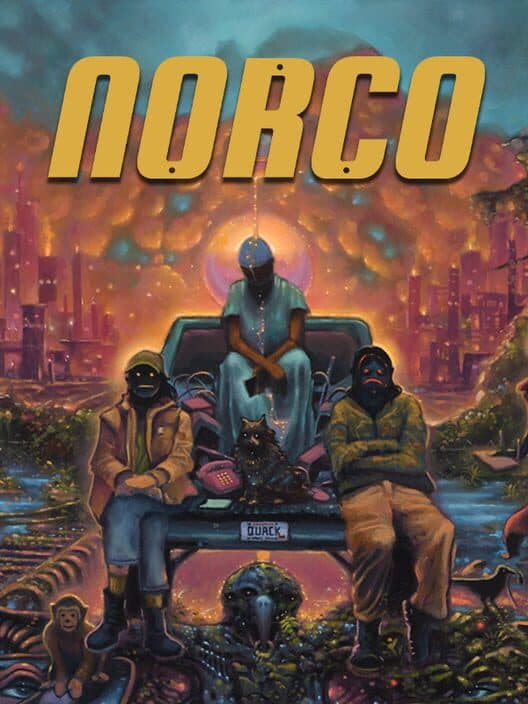
Players constantly praise the sinking suburbs, refineries, swamps, and local detail. The place feels specific and lived-in rather than a generic dystopian backdrop.
Even fans mention moments where the next interaction is too obscure, leading to wandering, retrying hotspots, or checking a guide just to keep the story moving.
For supporters, the density and ambiguity are the game's identity. Others admire the craft but feel unsure what scenes mean or struggle to connect emotionally.
Many players say the prose, dialogue, and character voice are the main reason to play. Even simple scenes land because the people and language feel sharp.
Players looking for more active mechanics sometimes bounce off the mostly reading-and-clicking structure, even when they respect the world, writing, and mood.
The soundtrack and visual style are repeatedly singled out for making the world feel dreamy, sad, and industrial in a way that sticks after the credits.
Players constantly praise the sinking suburbs, refineries, swamps, and local detail. The place feels specific and lived-in rather than a generic dystopian backdrop.
Many players say the prose, dialogue, and character voice are the main reason to play. Even simple scenes land because the people and language feel sharp.
The soundtrack and visual style are repeatedly singled out for making the world feel dreamy, sad, and industrial in a way that sticks after the credits.
Even fans mention moments where the next interaction is too obscure, leading to wandering, retrying hotspots, or checking a guide just to keep the story moving.
Players looking for more active mechanics sometimes bounce off the mostly reading-and-clicking structure, even when they respect the world, writing, and mood.
For supporters, the density and ambiguity are the game's identity. Others admire the craft but feel unsure what scenes mean or struggle to connect emotionally.
A short, finite story that fits weeknight sessions well, with strong solo flexibility but a bit of reorientation needed after longer breaks.
Norco is kind to a busy schedule. A full playthrough usually lands around 7 to 12 hours, and the structure naturally breaks into clean chunks because conversations, discoveries, and puzzle solutions create regular stopping points. You can play for 30 minutes and still make meaningful progress, or sit down for 90 minutes and finish a whole sequence. It is fully solo, fully offline, and easy to pause, so there is no social obligation or timing pressure hanging over your week. The main caveat is return friction. If you step away for a couple of weeks, the controls will still feel simple, but the story may not. You may need a few minutes to reread recent dialogue and remember why a location or name mattered. Saving also seems convenient rather than fully freeform, with evidence pointing more to frequent autosaves than unlimited manual saves. Still, the overall ask is friendly: give it a handful of evenings and focused attention, and it gives back a complete, finite story instead of another endless hobby.
Mostly quiet, reading-heavy play that asks for attention and memory, not speed. You can pause anytime, but the writing wants you mentally present.
Norco asks for attention in a very specific way. It is not fast, twitchy, or mechanically busy. Instead, it wants you to read closely, notice strange details, remember who said what, and keep a loose thread of the current mystery in your head. Most sessions are quiet and deliberate: talk to someone, inspect a room, move to the next screen, then test the one clue that feels important. That means you can absolutely pause, sip coffee, answer a text, and come back without disaster. But while you are actively playing, half-listening is a bad fit because the important work is buried in dialogue, mood, and small environmental cues. In other words, it asks for presence rather than speed. Give it steady attention and it delivers one of its best qualities: the pleasure of slowly realizing how its people, places, and ideas connect. If you want a game you can play while a podcast does the heavy lifting, this will feel demanding. If you like slow investigation and strong writing, its pace feels absorbing rather than tiring.
Easy to operate and quick to learn, though a few old-school puzzle leaps can stall progress harder than the controls ever do.
Norco is easy to learn and only occasionally tricky to progress through. The controls and basic language of play are simple within minutes: click objects, exhaust dialogue, move between areas, use items when something seems relevant. You do not need fast hands, build planning, or long practice to feel competent. The catch is classic adventure-game friction. Every so often, the game wants a leap of logic or a specific interaction chain that is less obvious than the writing around it. Those moments can stop the story cold, especially if you only play in short bursts and forget a clue from earlier. So the challenge here is not about mastery in the usual sense. It is about patience, observation, and willingness to test a few possibilities. Give it that, and it rewards you with smooth flow most of the time and satisfying reveals when the pieces click. If you dislike getting stuck in old-school puzzles, this is where your friction will come from. A hint guide can genuinely improve the experience without ruining its best parts.
Mechanically calm but emotionally heavy, with grief, decay, and eerie surrealism doing the work instead of danger, combat, or repeated failure.
This is emotionally heavy, not physically stressful. Norco spends a lot of time with grief, family damage, corporate ruin, religious imagery, and the sick feeling of a place being hollowed out. The music and pixel art make that sadness feel eerie and lived-in, so even calm scenes can carry weight. What it does not do very often is raise your pulse. There are no long combat gauntlets, no chase sequences driving the whole experience, and almost no punishment that makes failure feel scary. The pressure comes from mood, not danger. That makes it a good fit when you want something reflective, strange, and a little haunting, especially in a quiet evening session. It is a worse fit when you want comfort food or pure wind-down play. The exchange is simple: it asks you to sit with melancholy and uncertainty, then pays that off with a setting and story that feel unusually personal and memorable. The heaviness is part of what makes it stick.
Games with a similar rhythm and feel, even if they look different