hello@slated.gg
Powered by IGDB•Privacy•Terms

© 2026 Slated.gg

Slated.gg
Popular GamesAbout

Pokémon Champions

The Pokémon Company • 2026 • Android, iOS, Nintendo Switch, Nintendo Switch 2

Satisfying to completePerfect for a weekendLighthearted & fun

Is Pokémon Champions Worth It?

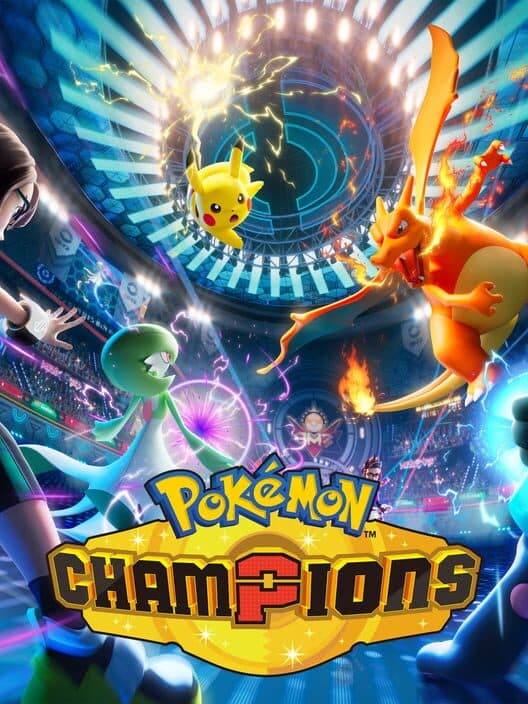
Pokémon Champions looks worth trying if your favorite part of Pokémon is the battle screen, not the journey around it. The biggest draw is efficiency: short matches, fast access to team building, clear goals, and cross-platform play that should be easy to fit into weeknights. If you enjoy reading an opponent, tweaking a roster over several evenings, and slowly learning one solid team, this could be a great use of your time. If your favorite parts of Pokémon are story, exploration, catching in the wild, or building a giant collection, this is probably the wrong branch of the series for you. The other major caution is monetization. Because the game is free to start, there is little barrier to sampling it, but the current pass and membership plans raise fair questions about competitive fairness. My verdict: try it for free if you want pure battles and clean session structure, wait and watch how fair the economy feels if you care about ranked, and skip it if you want a traditional Pokémon adventure.

Pokémon Champions cover art

Pokémon Champions

The Pokémon Company • 2026 • Android, iOS, Nintendo Switch, Nintendo Switch 2

Satisfying to completePerfect for a weekendLighthearted & fun

Is Pokémon Champions Worth It?

Pokémon Champions looks worth trying if your favorite part of Pokémon is the battle screen, not the journey around it. The biggest draw is efficiency: short matches, fast access to team building, clear goals, and cross-platform play that should be easy to fit into weeknights. If you enjoy reading an opponent, tweaking a roster over several evenings, and slowly learning one solid team, this could be a great use of your time. If your favorite parts of Pokémon are story, exploration, catching in the wild, or building a giant collection, this is probably the wrong branch of the series for you. The other major caution is monetization. Because the game is free to start, there is little barrier to sampling it, but the current pass and membership plans raise fair questions about competitive fairness. My verdict: try it for free if you want pure battles and clean session structure, wait and watch how fair the economy feels if you care about ranked, and skip it if you want a traditional Pokémon adventure.

What is Pokémon Champions like?

Opinions of Pokémon Champions

What Players Love

Common Concerns

Divisive Aspects

Players Love

A dedicated battle hub cuts the usual Pokémon busywork

Players like that it skips the usual story and setup grind, letting them build a team and jump into Casual, Ranked, or Private Battles much faster.

Common Concern

Monetization raises real concerns about competitive fairness over time

The biggest worry is that paid passes, membership perks, and rewards like Mega Stones could make competitive readiness faster or easier for spenders.

Divisive

Battle-only focus excites competitors but leaves others cold

Some players love a clean battle-first game, while others miss the usual mix of exploration, collecting, story, and broader rule options.

Players Love

HOME support and cross-platform play feel truly convenient

Cross-platform access and Pokémon HOME support make the game easier to fit into real life, especially for returning players with existing collections.

Common Concern

Limited launch roster weakens the all-in-one promise

Only part of the full roster is available at launch, which makes the central battle-hub pitch feel smaller than many players expected.

Players Love

A dedicated battle hub cuts the usual Pokémon busywork

Players like that it skips the usual story and setup grind, letting them build a team and jump into Casual, Ranked, or Private Battles much faster.

Players Love

HOME support and cross-platform play feel truly convenient

Cross-platform access and Pokémon HOME support make the game easier to fit into real life, especially for returning players with existing collections.

Common Concern

Monetization raises real concerns about competitive fairness over time

The biggest worry is that paid passes, membership perks, and rewards like Mega Stones could make competitive readiness faster or easier for spenders.

Common Concern

Limited launch roster weakens the all-in-one promise

Only part of the full roster is available at launch, which makes the central battle-hub pitch feel smaller than many players expected.

Divisive

Battle-only focus excites competitors but leaves others cold

Some players love a clean battle-first game, while others miss the usual mix of exploration, collecting, story, and broader rule options.

What does Pokémon Champions demand from you?

Time

MODERATE

Time

It fits nicely into weeknights because matches end cleanly, but active games are poor interruption territory and the whole loop depends on staying online.

MODERATE

This is a strong fit for short scheduled sessions, not for messy stop-and-start play. The good news is that the structure respects your calendar better than a big campaign does. A match ends, rewards are handed out, and you have a natural off-ramp every time. That makes 30, 60, or 90 minutes feel useful. The catch is that once you are inside a live match, the game is not flexible. There is no real pause safety, and being distracted at the wrong time can hand away a game. There is also no offline story to fall back on if servers are busy or you just do not want head-to-head play that night. To feel like you really experienced what this offers, you probably need one stable team and enough matches to understand the current rule set, which is closer to a few weeks of evening play than a single weekend. Returning later should be possible, but live-service rule changes mean you may need a brief refresher before you jump back in.

Tips

  • Plan sessions around whole matches, not spare minutes; once a battle starts, assume you need uninterrupted time until the result screen.
  • A great first goal is one stable team and 15 to 25 matches, not chasing rank immediately.
  • After a week away, read the current regulations before queuing; rule changes matter more here than muscle memory.

Focus

MODERATE

Focus

Most of your effort goes into reading team previews, predicting switches, and planning two or three turns ahead, while your hands do very little work.

MODERATE

This asks for steady attention during each match and pays that back with the very specific pleasure of outthinking another person. You are not mashing buttons or reacting in split seconds. Instead, you are reading team preview, guessing what the opponent wants, and deciding whether to stay in, switch out, or commit to a big turn. That makes it friendlier on tired hands than an action game, but not especially friendly to half-watching a show at the same time. The pace is slower, yet the choices still matter. For a busy player, the best fit is someone who enjoys mental sparring in short bursts. If you love the part of Pokémon where a smart switch or hidden move flips the whole match, this delivers that in concentrated form. If you mainly want to relax and click through something on autopilot, it probably asks for more attention than its bright presentation suggests.

Tips

  • Play Casual first and stick with one team for several nights; repeated reps teach matchups faster than rebuilding after every loss.
  • Before locking a move, ask what your opponent's most likely win condition is; that short pause catches many bad switches and greedy power plays.
  • If you play on mobile, silence notifications during matches so turn timers do not punish split attention.

Challenge

MODERATE

Challenge

You can learn the buttons quickly, but learning why teams work, when to switch, and what common threats do takes several evenings.

MODERATE

The nice part is that the basic interface should be easy to understand almost right away. The hard part is learning the language of competitive play. A strong turn is rarely just about picking the strongest move. It is about knowing what your team is supposed to do, when to trade damage for position, and which threats you need to preserve answers for. That learning process is much smoother here than in older Pokémon games because the battle-focused structure cuts away story filler and some setup grind. Still, there is a real knowledge wall if you have only played the single-player campaigns. The good news is that mistakes are usually short and educational. You lose a match, tweak a move, and try again. For most players, the path to feeling competent is not mastering every possible team. It is learning one format, one roster, and a small set of common matchups until the game starts to feel readable instead of chaotic.

Tips

  • Learn one format first, either Singles or Doubles, instead of bouncing between both before basic matchup habits stick.
  • Keep notes on common threats and your safest answers; a small cheat sheet cuts down repeat mistakes.
  • Change one move or stat choice at a time so you can tell what actually fixed a matchup.

Intensity

MODERATE

Intensity

The pressure comes from close online matches and visible rank swings, not horror or fast action, so nerves show up in bursts rather than all night.

MODERATE

This is more tense than cozy, but less draining than most action-heavy competitive games. The stress is usually the good kind: a close read, a risky switch, a final turn where both players know the result could swing the match. Between games, the mood drops back down fast because you are mostly in menus, rewards, and team edits. That creates a nice rhythm of calm setup followed by short spikes of pressure. The sting of losing is real, especially in ranked, yet the punishment is usually contained to one match and a bit of ladder movement rather than a huge time loss. That makes it easier to shake off than a long raid or team shooter. If you like smart head-to-head games that can raise your pulse without exhausting you, this should land well. If any visible rank drop ruins your evening, stick to casual modes and treat ranked as an occasional test instead of your default home.

Tips

  • Use Casual Battles when you are tired; Ranked feels much harsher when you are learning a new team or returning after a break.
  • End the session after two frustrating losses in a row; short matches make tilt more expensive than patience.
  • Treat rank as feedback, not a verdict; the quick loop makes it easier to reset than in long competitive games.

Frequently Asked Questions

You Might Also Like

Games with a similar rhythm and feel, even if they look different

Fortnite game cover art
Satisfying to completePerfect for a weekend

Fortnite

Time
LOW
Focus
HIGH
Challenge
MODERATE
Intensity
MODERATE
Kirby Air Riders game cover art
Satisfying to completePerfect for a weekend

Kirby Air Riders

Time
LOW
Focus
HIGH
Challenge
MODERATE
Intensity
MODERATE
Street Fighter 6 game cover art
Satisfying to completePerfect for a weekend

Street Fighter 6

Time
MODERATE
Focus
VERY HIGH
Challenge
HIGH
Intensity
HIGH
Dragon Ball: Sparking! Zero game cover art
Satisfying to completePerfect for a weekend

Dragon Ball: Sparking! Zero

Time
LOW
Focus
HIGH
Challenge
MODERATE
Intensity
MODERATE
Dead by Daylight game cover art
Satisfying to completePerfect for a weekend

Dead by Daylight

Time
MODERATE
Focus
HIGH
Challenge
HIGH
Intensity
HIGH
Mario Tennis Fever game cover art
Satisfying to completePerfect for a weekend

Mario Tennis Fever

Time
LOW
Focus
MODERATE
Challenge
MODERATE
Intensity
MODERATE
← Back to Home